



Allen Tillery Auto Chevrolet

Blog / Chevrolet Dealership Hot Springs

Commercial Fleet 2026 Chevrolet Express Cargo Van and Cutaway Utility

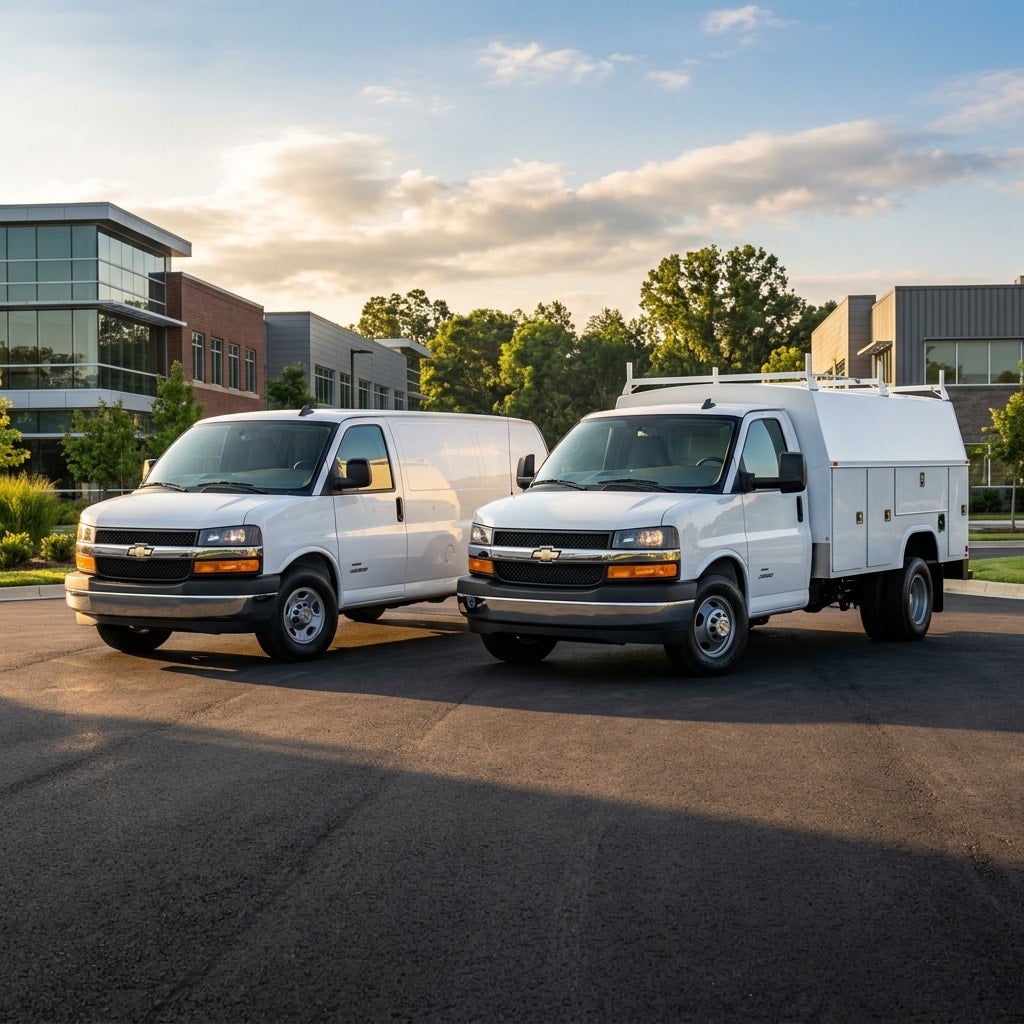
2026 Chevrolet Express Cargo Van and Cutaway utility box upfit parked at a commercial business

Unlocking Commercial Potential with the 2026 Chevy Express Lineup

The 2026 Chevrolet Express remains a cornerstone for businesses requiring a body-on-frame, rear-wheel-drive architecture that can handle rigorous daily use. Whether your operation involves local deliveries, specialized trade services, or passenger transport, this platform provides the durability and simplicity necessary to minimize downtime. Our dealership specializes in matching business owners with the specific configurations that suit their bottom line, offering a deep dive into our new-vehicle inventory to find the right wheelbase and payload capacity for your specific industry.

The lineup is divided into two primary formats: the Express Cargo Van and the Express Cutaway. The cargo van is a ready-to-work solution with a finished metal shell, while the cutaway serves as a versatile chassis for custom upfits. For companies operating near Texarkana, the ability to specify a vehicle that handles both urban stop-and-go traffic and longer highway hauls is a significant advantage. The Express 3500 and Express 4500 series provide the heavy-duty foundations required for high-GVWR applications, ensuring that even the heaviest equipment loads remain stable.

When you are ready to evaluate these workhorses in person, you can find us at our showroom on Central Ave. Our team understands that commercial purchasing is about more than just a single transaction; it is about finding a partner who can support your fleet's growth. You can reach us at (501) 881-4160 to discuss current availability or to request a specific configuration for your business needs.

Table of Contents

Capability and Configurations of the 2026 Express Cutaway and Cargo Vans

Payload and towing capacities define the value of a commercial vehicle, and the 2026 Express delivers figures that rival many heavy-duty trucks. The Express Cargo Van offers a max payload of 3,496 pounds and a max towing capacity of up to 10,000 pounds when properly equipped. These numbers are supported by a ladder-frame design that provides the structural integrity needed for hauling heavy machinery or densely packed inventory. For businesses looking for a cost-effective entry point, exploring our used-vehicle inventory can often reveal well-maintained late-model vans that offer similar structural capabilities.

The Express Cutaway takes this capability a step further by offering three distinct wheelbase options: 139-inch, 159-inch, and 177-inch. The 3500 series cutaway can reach a max payload of 8,920 pounds, making it a favorite for box truck and shuttle bus conversions. In the rural areas around Hope, where agricultural transport and local commerce often require specialized bodies, the cutaway's ability to support a Gross Combination Weight Rating of up to 20,000 pounds is essential. This allows for a fully loaded service body while still maintaining the power to pull a trailer.

Choosing between the 2500 and 3500 series often comes down to your daily weight requirements. The 2500 is a robust choice for general delivery and plumbing or electrical trades, while the 3500 and 4500 are designed for the most demanding upfits. The Express 4500 Cutaway specifically targets the highest weight classes with a 14,200-lb GVWR, providing the headroom needed for heavy-duty refrigeration units or large-scale utility bodies.

Comparing Engine Performance and Powertrain Options for Business Fleet Needs

The heart of the 2026 Express lineup consists of two proven gasoline powertrains designed for longevity and ease of maintenance. The standard engine for the Express 3500 with a 139-inch wheelbase is the 4.3L V6, which produces 276 hp and 298 lb-ft of torque. This engine is paired with an 8-speed automatic transmission, offering a balance of low-end grunt for city driving and efficient cruising for regional routes. For many delivery fleets, this V6 provides ample power without the higher initial cost of a larger engine.

Does the 6.6L V8 provide enough muscle for your heaviest upfits? Standard on the Express 4500 and longer-wheelbase 3500 models, this engine generates 401 hp and 464 lb-ft of torque. This powertrain is specifically engineered for high-stress environments, featuring a heavy-duty cooling system and an 8-speed automatic transmission calibrated for hauling. The engine bay layout provides clear access to basic components, which helps keep technicians efficient when performing a standard oil change or other routine fluid checks.

The transition from the old 6.0L V8 to the current 6.6L V8 brought a significant jump in torque, which is immediately noticeable when merging onto the highway with a full load. This extra power reduces the strain on the engine during heavy towing, which can contribute to a longer service life for the vehicle. While the V6 is excellent for light-to-medium duty, the V8 is the recommended option for any cutaway destined for a high-profile box or a heavy utility upfit.

Maximizing Utility with Upfits and Interior Cargo Dimensions

The interior of the Express Cargo Van is a blank canvas for organization, featuring a cargo width of about 52 inches between the wheel housings and a rear door opening designed for easy pallet loading. With the extended wheelbase version, the maximum cargo length from the front seats to the rear doors provides enough space for long pipes, lumber, or multiple equipment racks. For technicians who spend their day working out of their van, we recommend looking at specialized upfit packages that include shelving units, drawer systems, and secure partitions to protect the driver from shifting cargo.

The Express Cutaway is even more flexible, designed to accommodate a variety of commercial bodies from independent suppliers. Common applications include:

  • Utility/Service Bodies: Ideal for electricians and HVAC contractors who need exterior-access compartments.
  • Box Trucks/Hi-Cubes: Perfect for delivery services requiring a square cargo area and a roll-up rear door.
  • Shuttle Buses: A popular choice for hotels and transit authorities needing reliable passenger transport.

Safety on the job site is also a priority, with available features like Rear Vision Camera, Lane Departure Warning, and Forward Collision Alert. These technologies are especially helpful when navigating tight loading zones or busy urban streets in Little Rock. Maintaining these systems is vital for fleet safety, and our team can assist with ensuring your vehicle stays in peak condition, including specialized brake service and repair to handle the increased stopping distances required by fully loaded commercial vehicles.

Future Outlook and Purchasing Strategies for the 2026 and 2027 Model Years

As we look toward the 2027 model year, the Chevrolet Express is expected to maintain its proven body-on-frame design. While there is often speculation about interior refreshes, the current focus remains on functional reliability and commercial utility. For businesses planning their next three to five years of growth, the 2026 model represents a stable investment with a well-understood cost of ownership. We often suggest that fleet managers coordinate their purchases early in the model year to ensure they can secure the specific wheelbases and engine combinations their upfitters require.

Strategizing your purchase also involves considering the long-term wear on components like tires, especially for vehicles that carry heavy loads daily. Regular tire rotations are a simple way to extend the life of your commercial-grade rubber and maintain optimal traction. The current Express platform is one of the most supported in the industry, with parts and upfit components readily available across the country.

For small businesses, the 2026 Express may also qualify for significant tax incentives under Section 179, which can allow for a substantial deduction of the purchase price in the year the vehicle is placed in service. This makes the end of the calendar year a busy time for commercial sales, so we encourage local owners to start the conversation early. Whether you are adding a single van or refreshing an entire fleet, our team is prepared to help you navigate the ordering process to meet your year-end goals.

Securing the right financing is just as important as choosing the right truck. For business owners, the path to ownership is often smoother when working with a dedicated commercial sales manager who understands fleet incentives and business credit lines. Unlike a standard retail purchase, commercial financing can be tailored to the seasonal cash flow of your business. You can begin the process today by completing our quick finance application, which helps our team identify the best rates and terms for your specific situation.

When you visit us to finalize your fleet purchase, please bring your business tax ID, proof of insurance, and any relevant trade-in titles. Having this documentation ready allows our F&I department to move quickly, often getting your new vehicles on the road in a fraction of the time. If you need to coordinate with an upfitter, we can facilitate the delivery of your cutaway chassis directly to the body manufacturer, streamlining your logistics.

We invite you to stop by our dealership in Hot Springs to see the 2026 Express lineup firsthand. Our commercial experts are available at (501) 881-4160 to answer any questions about GVWR ratings, engine specs, or current fleet programs. Let us help you build a vehicle that works as hard as you do.

Common Questions About the 2026 Chevy Express

Q: What is the primary difference between the 2500 and 3500 Cargo Van models?
The main difference lies in the Gross Vehicle Weight Rating (GVWR) and the suspension tuning. The 3500 series is designed for heavier payloads and more frequent towing, featuring a beefier rear axle and higher-capacity springs compared to the 2500. If your daily cargo exceeds 3,000 pounds, the 3500 is generally the more durable choice for long-term use.

Q: Can I upfit a 2026 Express Cutaway with a 12-foot or 14-foot box?
Yes, the various wheelbase options allow for a wide range of box lengths. The 139-inch wheelbase is typically used for shorter 10-foot to 12-foot bodies, while the 159-inch and 177-inch wheelbases are better suited for 14-foot to 16-foot boxes. We recommend consulting with your upfitter to ensure the weight distribution and rear overhang meet safety standards for your specific chassis.

Q: Is the 6.6L V8 engine worth the upgrade over the standard V6?
For most commercial users, the answer is yes. While the V6 is a capable engine for light deliveries, the V8 provides the necessary torque for maintaining highway speeds when fully loaded or towing. The V8 also comes with a heavy-duty cooling system and a transmission calibration designed for the higher stress of commercial work, which can lead to better performance in demanding environments.

Q: How does the fuel tank capacity differ across the Cutaway models?
The standard fuel tank on the Express Cutaway is 32 gallons, which provides a respectable range for local routes. However, for long-distance transport or regional delivery, an available 57-gallon fuel tank can be specified on certain wheelbases. This larger tank significantly reduces the frequency of refueling stops, which is a major benefit for efficiency on longer hauls.

Q: Are there specific safety technologies available for the 2026 model?
While the Express focuses on traditional utility, it does offer modern driver-assist features to help prevent accidents. You can equip your van with Forward Collision Alert, Lane Departure Warning, and a Rear Vision Camera. These are particularly valuable for high-roof upfits or box trucks where rear visibility is naturally limited, helping your drivers navigate tight spaces more safely.

Start Your Commercial Journey at Allen Tillery Chevrolet, Buick & GMC

Choosing the right commercial vehicle is a strategic decision that affects your business's efficiency every day. The 2026 Chevy Express lineup offers the reliability, power, and upfit flexibility required to tackle any job. Our team is dedicated to providing the expertise and inventory you need to make an informed choice, from selecting the right GVWR to navigating complex commercial financing. Explore our current selection online or visit our showroom today to find the workhorse that will drive your business forward.

Keep your vehicle performing at its best with our service team:


© 2026 Allen Tillery Chevrolet, Buick & GMC. All rights reserved.

Posted in:

Related Posts

Exterior view of a 2026 Chevrolet Silverado 1500

2026 Silverado 1500 Camper Tongue Weight

The 2026 Chevrolet Silverado 1500 can tow up to 13,300 pounds, and a 22- to 24-foot travel trailer weighing 5,000 to 7,000 pounds loaded is a useful size to shop for if your truck can carry the hitch weight and passengers. A 7,000-pound camper typically puts about 700 to 1,050 pounds down on the hitch. Chevrolet reaches the 13,300-pound maximum with a two-wheel-drive Double Cab, standard bed, 3.0-liter Duramax diesel, Max Trailering Package and 20-inch wheels. By Allen Tillery Auto Chevrolet Key Numbers A 13,300-pound rating requires the right Duramax Double Cab, with Max Trailering and 20-inch wheels. For the 5,000-pound example, set aside 500 to 750 pounds of carrying capacity for the tongue. At the upper end of the normal hitch-weight range, a 7,000-pound camper can put 1,050 pounds on the ball. Start with 1,500 pounds of carrying capacity and subtract 1,050 at the hitch. That leaves 450 for everyone in the cab, the hardware and gear. How much tongue weight does a 5,000- to 7,000-pound camper put on the truck? Expect roughly 500 to 750 pounds on the ball from a 5,000-pound camper and 700 to 1,050 from a 7,000-pound camper. That comes from Chevrolet’s 10% to 15% guideline for conventional trailers. The trailer maker may specify a target, and the truck and hitch each have a rated limit. For a family towing from Benton or Bryant on Interstate 30, every pound on the hitch uses some of the same carrying allowance as people, hitch hardware and anything in the bed. The 2026 Silverado specifications show the cab and bed choices. The tire and loading sticker on the driver’s door gives the allowance for the specific truck. How does a 7,000-pound camper use up payload? A 1,500-pound carrying allowance leaves just 450 pounds after a camper puts 1,050 pounds on the hitch. If the people in the cab weigh 400 pounds altogether, only 50 pounds remain for hitch hardware and everything in the bed. That is how a truck can run out of room to carry weight before it reaches its trailer rating. Moving gear inside the camper can change how hard it presses on the truck. Before a trip toward Malvern or Arkadelphia, a tongue scale can give you the load on the ball and a truck scale can show what each axle carries. Those readings matter when passengers and gear leave only a small margin on the door sticker. Which Silverado 1500 gets the highest tow rating? Look for the two-wheel-drive Duramax Double Cab with the standard bed, Max Trailering and 20-inch wheels for Chevrolet’s top rating. The 2026 Chevrolet Trailering Guide breaks the ratings down by engine, cab, bed and drive type. A Crew Cab may give the family more room and carry a different tow rating. The Silverado 1500 inventory identifies each truck by cab and equipment. Traffic backing up on Highway 70 into Hot Springs can put the truck and trailer brakes to work together. The owner’s manual lists the conventional hitch limits and trailer-brake equipment. The Silverado maintenance schedule includes brake and tire inspections that Chevrolet service can do before a towing season. What does a 22- to 24-foot camper actually weigh? A 22-foot 4-inch Rockwood lists 4,493 pounds unloaded and room for 1,344 pounds of cargo, or 5,837 pounds together. One 23-foot 10-inch layout lists 5,132 pounds unloaded and room for 1,662 pounds of cargo, or 6,794 pounds together. Both are in the loaded range above, and both can weigh several hundred pounds more on the road than they do on the lot. Fully loaded, the 5,837-pound and 6,794-pound Rockwoods both land in the 5,000- to 7,000-pound range. The label on the camper gives its maximum loaded weight. The combined passenger, bed and hitch load still has to fit the Silverado’s carrying limit. Should I use the camper’s dry weight or its weight packed for a trip? Use the weight of the camper with water, batteries, propane and gear on board. The truck also carries the weight on the ball, the hitch hardware and everyone in the cab. The Silverado towing page gives model ratings, and the trailering label gives the limit for that particular cab, engine and equipment. A 22- to 24-foot floor plan can give a family the space it wants and fit a campsite at Lake Hamilton. Campers of that length can weigh very different amounts once packed. The weight on the lot is a starting figure, and the trailer’s loaded weight is the one to use for the trip. Silverado camper towing FAQs Where do I find the rating for my particular Silverado? The trailering label on the truck gives the limits for its cab, engine, drivetrain and equipment. A different cab or drive type can have a different rating even with the same Duramax engine. Should I use dry camper weight or loaded camper weight? For shopping, the trailer’s maximum loaded weight gives you a figure to plan around. Once you own it, a scale reading with your water, propane, batteries and trip gear gives you the weight for that drive. Can a hitch that spreads out the weight raise my tow rating? A weight-distributing hitch shifts some load among the truck and trailer axles. The truck's weight limits still apply, and the hitch has its own rating. Is a 7,000-pound trailer always 700 pounds on the hitch? It is about 700 pounds at the low end of Chevrolet’s conventional-trailer guideline and can be 350 pounds higher at the upper end. The actual reading can move when you shift gear inside the camper. Is the towing rating the only limit that matters? The truck has a trailer limit, a carrying limit and axle limits. The hitch also has limits. A truck can be within its trailer rating and still carry too much weight on the rear axle. Contact Allen Tillery Chevrolet in Hot Springs with the camper's loaded weight and the number of people who will ride in the truck. The showroom hours are listed for your trip from Benton or Malvern.

2027 Chevrolet Silverado 1500 pickup truck

2027 Silverado 1500 for Hot Springs Work Crews

The 2027 Silverado 1500 Work Truck starts at $41,395 with destination in Hot Springs. A two-wheel-drive Regular Cab with the Standard Bed has 79.68 inches of floor length, enough for a six-foot ladder with the tailgate up. With the 2.7L TurboMax, that setup can carry up to 2,340 pounds of payload. Quick Answer Chevrolet’s $38,600 base price plus $2,795 in destination freight comes to $41,395. The Regular Cab Standard Bed has 50.62 inches between the wheel wells, enough room for a four-foot sheet laid flat. A TurboMax Regular Cab Long Bed 2WD can tow up to 9,400 lbs when properly equipped. Chevrolet calls for a tire rotation and multi-point inspection every 7,500 miles. What does the Work Truck price include? The $41,395 factory starting price includes the $2,795 freight charge and the standard 350-hp TurboMax. It also includes the 10-speed automatic and LED headlights and taillights. The Work Truck gets the same 16.3-inch center touchscreen and 12.2-inch driver display that Chevy fits across all seven trims. The Work Truck’s $38,600 MSRP is Chevrolet’s base figure before freight. The TurboMax makes 455 lb-ft at 3,000 rpm. Chevrolet revised the turbocharger and pistons for the 2027 engine and paired it with the same 10-speed transmission used across the Silverado lineup. Will a four-by-eight sheet fit in the bed? A four-by-eight sheet fits between the wheel wells of the 2WD Regular Cab Standard Bed, with the end extending past the closed tailgate. There are 50.62 inches between the wells and 79.68 inches from the front of the box to the closed tailgate. The Silverado bed dimensions put the box at 71.7 cubic feet and 22.44 inches deep, with 71.41 inches of width at its widest point. A 2WD Regular Cab with the Standard Bed measures 212.12 inches from bumper to bumper. Its 40.7-foot turning circle is useful for a truck that makes repeated stops along Highway 70 in Hot Springs. A 2WD Double Cab with the Standard Bed keeps the same 79.68 inches of bed floor and adds a rear bench. How much can it carry and tow? Chevrolet rates the TurboMax Regular Cab Standard Bed 2WD for up to 2,340 pounds of payload. The TurboMax Regular Cab Long Bed 2WD reaches 9,400 lbs of conventional towing when properly equipped. For a crew hauling a utility trailer toward Benton, the Silverado towing chart puts a TurboMax Double Cab 2WD at up to 9,100 lbs. The 2027 towing supplement puts the tongue load on a conventional trailer at 10 to 15 percent of loaded trailer weight in typical use. That uses part of the truck’s payload along with the crew and the tools in the bed. Which cab seats the crew? The 2WD Regular Cab Standard Bed has three seats with its front bench. The 2WD Double Cab Standard Bed and 2WD Crew Cab Short Bed seat up to six with a front bench. Chevy gives the Double Cab 34.75 inches of rear legroom. The Crew Cab has 42.80 inches in the rear, which leaves more room for adults on a run from Malvern or Arkadelphia. All four engines in the 2027 Silverado lineup come with a 10-speed automatic. The 2WD Crew Cab Short Bed has 70.15 inches of inside bed length and 62.8 cubic feet of cargo room. A six-foot ladder is longer than that bed floor with the tailgate up. What service comes up first? The first scheduled tire rotation and multi-point inspection come at 7,500 miles. The 2.7L TurboMax uses 6.0 quarts of dexos1 SAE 0W-30 with an oil filter. Chevrolet calls for an oil and filter change within 600 miles of the message and at least every 12 months. The Silverado maintenance schedule includes the 60,000-mile spark plug interval for the TurboMax and the 22,500-mile or 24-month cabin filter interval. Chevrolet covers the first oil and filter change, a four-tire rotation and a multi-point inspection at a participating dealer during the first year. Chevrolet’s bumper-to-bumper limited warranty covers defects in materials or workmanship for three years or 36,000 miles, whichever comes first. The 22,500-mile cabin filter falls on the third 7,500-mile rotation if the truck reaches that mileage before the two-year filter deadline. A Work Truck used year-round can reach the annual oil deadline on a different visit from its mileage-based tire rotation. Chevrolet calls for a new oil filter at each oil change and brake fluid replacement every five years. Shopping for a Work Truck in Hot Springs Allen Tillery Chevrolet is at 4573 Central Ave in Hot Springs. Buyers from Bryant, Benton and Malvern can view the 2027 Silverado inventory search or call (501) 881-4274 about a Work Truck. Chevrolet lists late-2026 availability for the redesigned Silverado. Owners can schedule Certified Service at the same address. The factory starting price includes freight. Taxes, fees and optional equipment can change the total. 2027 Silverado 1500 Work Truck FAQs How much is a base Work Truck before freight? The factory price is $38,600 before freight. Chevrolet’s $2,795 freight charge puts the starting figure at $41,395. The base Work Truck gets the 350-hp TurboMax with a 10-speed automatic and the 16.3-inch center touchscreen. How much does a 2WD TurboMax Regular Cab weigh empty? Chevrolet gives a base curb weight of 4,560 pounds for the TurboMax 2WD Regular Cab Standard Bed. The same setup has a 6,900-pound gross vehicle weight rating and a maximum payload of 2,340 pounds. How much can a 4WD TurboMax Double Cab tow? The TurboMax Double Cab 4WD can tow up to 8,900 lbs when properly equipped. Chevrolet’s engineering figures give the same 8,900-lb maximum for the 4WD TurboMax Crew Cab. When are TurboMax spark plugs due? Chevrolet schedules TurboMax spark plug replacement at 60,000 miles. The same owner’s manual schedules brake fluid every five years and coolant at 150,000 miles or six years, whichever comes first. What can I see on the Work Truck’s dash? The Work Truck has a standard 16.3-inch center touchscreen and 12.2-inch driver display. Chevrolet also includes an HD Rear Vision Camera and front and rear park assist on the 2027 lineup, useful when backing into a loading bay.

2026 Chevrolet Silverado 1500 on a dirt road

How Long Do Silverado 1500 Brake Pads Last?

Chevrolet puts brake pad life in average driving at 40,000 to 60,000 miles, with very heavy use cutting that to 20,000 to 25,000 miles. At 20% on a Silverado 1500, get the pads measured before counting on another 5,000 miles. Chevrolet recommends replacing pads at 2 millimeters of lining even when the dash shows life left. By Allen Tillery Auto Chevrolet Key Numbers Chevrolet estimates 40,000 to 60,000 miles in average use and 20,000 to 25,000 miles in very heavy stop-and-go use. GM shows a separate example of a late-life warning with 2,000 miles left. A 20% reading gives you a reason to measure the pads before a long tow. Replace Silverado pads at or before 2 mm of lining, even with a dashboard reading above 0%. Budget $348–$405 before taxes and fees for a 2026 Silverado 1500 pad job, based on RepairPal’s estimate. A matching GM front rotor is $265.79 at suggested retail, before installation. Can I drive another 5,000 miles at 20% brake pad life? At 20%, an inspection can tell you whether a pad is already near Chevrolet’s 2 mm replacement point. GM’s service information uses 2,000 miles as an example of the separate distance warning the truck can display as the pads wear. Plan the brake job around the wear the inspection finds or the mileage warning your truck displays. A week towing into Malvern or descending toward Lake Hamilton can wear the pads faster than a week of light highway driving. An Allen Tillery Chevrolet brake inspection measures the lining at each wheel so a thin inside pad can be caught while the dash still shows life left. When do I replace the pads, at 0% or at 2 mm? Replace the pads at 2 mm of lining, even if the dash still shows a positive reading. At 0%, the monitor has reached its estimate for when that axle set is due. A mechanic can measure 2 mm at one wheel before the monitor reaches zero, especially when one pad wears much faster than its mate. Chevrolet says to replace worn pads on both wheels of the same axle. The Chevrolet brake pad system uses sensors and driving data, and the 2026 owner’s manual calls for new sensors with the pads being replaced. A persistent wear chirp or grinding warrants an inspection before a trip to Arkadelphia. What wears out Silverado pads faster? Frequent stops and towing down grades can put a Silverado toward the low end of Chevrolet’s estimate. A truck that spends its week on Interstate 30 between Benton and Bryant can go miles between brake applications. A loaded trailer descending Highway 270 toward Hot Springs puts more heat into the truck’s brakes each time the driver slows. A Silverado that tows regularly can need a pad inspection long before the odometer reaches the average mileage range. Chevrolet includes brake inspections in its 2026 Silverado 1500 maintenance schedule. Catching a thin inside pad at a tire rotation can save the rotor from getting gouged. Do Silverado front and rear pads wear at the same rate? Front pads often wear sooner because the Silverado puts more load on the front wheels when it slows. A sticking rear caliper can wear out the rear set first. A front reading of 20% and a rear reading of 55% can both be right on the same truck. The Chevrolet service department measures inner and outer pads so a single thin pad gets spotted. A front brake job can leave the rear set in service if both rear wheels have enough lining. A technician who finds a worn inside pad can also check the caliper and hardware at that wheel so a sticking part won’t wear out the replacement. What do Silverado 1500 pads and rotors cost? RepairPal estimates $348 to $405 for a 2026 Silverado 1500 pad replacement before taxes and fees. Rotors add parts and labor when they are too thin or too damaged to reuse. GM’s parts catalog lists one front rotor that fits certain 2026 Silverado 1500s at $265.79 suggested retail, or $531.58 for two at that price before labor, taxes and fees. A shop measures the rotors against Chevrolet’s minimum thickness and looks for deep grooves or damage. When the rotors pass inspection, the estimate can cover pads and sensors without a new pair of rotors. Drivers from Malvern or Arkadelphia can check Hot Springs service hours for brake inspections on Central Avenue. Frequently Asked Questions When does the Silverado display miles instead of pad life? A mileage warning can appear as the pads approach replacement. GM’s 2,000-mile example is the type of distance the truck can display with that warning. How thin is 2 millimeters of brake lining? Two millimeters is about 0.08 inch of friction material above the backing plate. That is Chevrolet’s replacement point. Do I need all four sets of pads when the front reading is low? Chevrolet replaces pads as axle sets. A front job covers both front wheels. The rear pads can stay in use if they pass inspection. Will new pads stop a vibration under braking? A technician can measure rotor thickness and check the rotor surface when the truck shakes under braking. The pad estimate can change if the same inspection finds a rotor below its minimum thickness. What if my Silverado grinds when I brake? Have the brakes inspected promptly. If braking is reduced or a brake-system warning appears, stop safely and arrange help. Schedule a Silverado brake inspection at Allen Tillery Chevrolet in Hot Springs. Contact Allen Tillery Chevrolet for a pad and rotor estimate.