



Allen Tillery Auto Chevrolet

Blog

All Chevrolet Dealership Hot Springs Allen Tillery Chevrolet Malvern Chevrolet Dealership Hot Springs Used Cars Chevrolet SUVs Hot Springs Chevrolet Dealership Mechanic Hot Springs Chevrolet Silverado 1500 Chevy Dealer Hot Springs Chevrolet Dealership Benton, AR Arkadelphia Chevrolet Dealership Chevrolet Service Hot Springs Chevy Mechanic Hot Springs Chevrolet Silverado 2500HD Chevy Trucks Little Rock Chevrolet Dealership Used Chevy Trucks Chevrolet Colorado New Chevrolet Traverse Chevy Brake Replacement Allen Tillery Buick GMC Service Arkadelphia Auto Repair Service Used Cars Malvern Chevrolet Dealership Little Rock Used Car Dealer Work Trucks Brake Repair Services Chevrolet Service Malvern Auto Repair Oil Change Services Used Cars Little Rock Auto Repair Silverado 2500 Used Cars Benton Tire Rotation Chevrolet Dealership Texarkana Tillery Chevrolet Used Trucks Hot Springs Chevy Dealer Little Rock Chevy Equinox Chevrolet Trax Chevy Tahoe
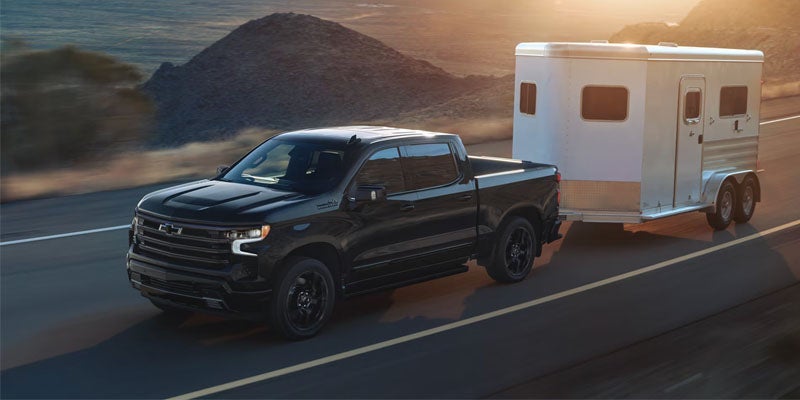
Exterior view of a 2026 Chevrolet Silverado 1500
in Chevrolet Dealership Hot Springs

2026 Silverado 1500 Camper Tongue Weight

The 2026 Chevrolet Silverado 1500 can tow up to 13,300 pounds, and a 22- to 24-foot travel trailer weighing 5,000 to 7,000 pounds loaded is a useful size to shop for if your truck can carry the hitch weight and passengers. A 7,000-pound camper typically puts about 700 to 1,050 pounds down on the hitch. Chevrolet reaches the 13,300-pound maximum with a two-wheel-drive Double Cab, standard bed, 3.0-liter Duramax diesel, Max Trailering Package and 20-inch wheels. By Allen Tillery Auto Chevrolet Key Numbers A 13,300-pound rating requires the right Duramax Double Cab, with Max Trailering and 20-inch wheels. For the 5,000-pound example, set aside 500 to 750 pounds of carrying capacity for the tongue. At the upper end of the normal hitch-weight range, a 7,000-pound camper can put 1,050 pounds on the ball. Start with 1,500 pounds of carrying capacity and subtract 1,050 at the hitch. That leaves 450 for everyone in the cab, the hardware and gear. How much tongue weight does a 5,000- to 7,000-pound camper put on the truck? Expect roughly 500 to 750 pounds on the ball from a 5,000-pound camper and 700 to 1,050 from a 7,000-pound camper. That comes from Chevrolet’s 10% to 15% guideline for conventional trailers. The trailer maker may specify a target, and the truck and hitch each have a rated limit. For a family towing from Benton or Bryant on Interstate 30, every pound on the hitch uses some of the same carrying allowance as people, hitch hardware and anything in the bed. The 2026 Silverado specifications show the cab and bed choices. The tire and loading sticker on the driver’s door gives the allowance for the specific truck. How does a 7,000-pound camper use up payload? A 1,500-pound carrying allowance leaves just 450 pounds after a camper puts 1,050 pounds on the hitch. If the people in the cab weigh 400 pounds altogether, only 50 pounds remain for hitch hardware and everything in the bed. That is how a truck can run out of room to carry weight before it reaches its trailer rating. Moving gear inside the camper can change how hard it presses on the truck. Before a trip toward Malvern or Arkadelphia, a tongue scale can give you the load on the ball and a truck scale can show what each axle carries. Those readings matter when passengers and gear leave only a small margin on the door sticker. Which Silverado 1500 gets the highest tow rating? Look for the two-wheel-drive Duramax Double Cab with the standard bed, Max Trailering and 20-inch wheels for Chevrolet’s top rating. The 2026 Chevrolet Trailering Guide breaks the ratings down by engine, cab, bed and drive type. A Crew Cab may give the family more room and carry a different tow rating. The Silverado 1500 inventory identifies each truck by cab and equipment. Traffic backing up on Highway 70 into Hot Springs can put the truck and trailer brakes to work together. The owner’s manual lists the conventional hitch limits and trailer-brake equipment. The Silverado maintenance schedule includes brake and tire inspections that Chevrolet service can do before a towing season. What does a 22- to 24-foot camper actually weigh? A 22-foot 4-inch Rockwood lists 4,493 pounds unloaded and room for 1,344 pounds of cargo, or 5,837 pounds together. One 23-foot 10-inch layout lists 5,132 pounds unloaded and room for 1,662 pounds of cargo, or 6,794 pounds together. Both are in the loaded range above, and both can weigh several hundred pounds more on the road than they do on the lot. Fully loaded, the 5,837-pound and 6,794-pound Rockwoods both land in the 5,000- to 7,000-pound range. The label on the camper gives its maximum loaded weight. The combined passenger, bed and hitch load still has to fit the Silverado’s carrying limit. Should I use the camper’s dry weight or its weight packed for a trip? Use the weight of the camper with water, batteries, propane and gear on board. The truck also carries the weight on the ball, the hitch hardware and everyone in the cab. The Silverado towing page gives model ratings, and the trailering label gives the limit for that particular cab, engine and equipment. A 22- to 24-foot floor plan can give a family the space it wants and fit a campsite at Lake Hamilton. Campers of that length can weigh very different amounts once packed. The weight on the lot is a starting figure, and the trailer’s loaded weight is the one to use for the trip. Silverado camper towing FAQs Where do I find the rating for my particular Silverado? The trailering label on the truck gives the limits for its cab, engine, drivetrain and equipment. A different cab or drive type can have a different rating even with the same Duramax engine. Should I use dry camper weight or loaded camper weight? For shopping, the trailer’s maximum loaded weight gives you a figure to plan around. Once you own it, a scale reading with your water, propane, batteries and trip gear gives you the weight for that drive. Can a hitch that spreads out the weight raise my tow rating? A weight-distributing hitch shifts some load among the truck and trailer axles. The truck's weight limits still apply, and the hitch has its own rating. Is a 7,000-pound trailer always 700 pounds on the hitch? It is about 700 pounds at the low end of Chevrolet’s conventional-trailer guideline and can be 350 pounds higher at the upper end. The actual reading can move when you shift gear inside the camper. Is the towing rating the only limit that matters? The truck has a trailer limit, a carrying limit and axle limits. The hitch also has limits. A truck can be within its trailer rating and still carry too much weight on the rear axle. Contact Allen Tillery Chevrolet in Hot Springs with the camper's loaded weight and the number of people who will ride in the truck. The showroom hours are listed for your trip from Benton or Malvern.

Read More
2027 Chevrolet Silverado 1500 pickup truck

2027 Silverado 1500 for Hot Springs Work Crews

The 2027 Silverado 1500 Work Truck starts at $41,395 with destination in Hot Springs. A two-wheel-drive Regular Cab with the Standard Bed has 79.68 inches of floor length, enough for a six-foot ladder with the tailgate up. With the 2.7L TurboMax, that setup can carry up to 2,340 pounds of payload. Quick Answer Chevrolet’s $38,600 base price plus $2,795 in destination freight comes to $41,395. The Regular Cab Standard Bed has 50.62 inches between the wheel wells, enough room for a four-foot sheet laid flat. A TurboMax Regular Cab Long Bed 2WD can tow up to 9,400 lbs when properly equipped. Chevrolet calls for a tire rotation and multi-point inspection every 7,500 miles. What does the Work Truck price include? The $41,395 factory starting price includes the $2,795 freight charge and the standard 350-hp TurboMax. It also includes the 10-speed automatic and LED headlights and taillights. The Work Truck gets the same 16.3-inch center touchscreen and 12.2-inch driver display that Chevy fits across all seven trims. The Work Truck’s $38,600 MSRP is Chevrolet’s base figure before freight. The TurboMax makes 455 lb-ft at 3,000 rpm. Chevrolet revised the turbocharger and pistons for the 2027 engine and paired it with the same 10-speed transmission used across the Silverado lineup. Will a four-by-eight sheet fit in the bed? A four-by-eight sheet fits between the wheel wells of the 2WD Regular Cab Standard Bed, with the end extending past the closed tailgate. There are 50.62 inches between the wells and 79.68 inches from the front of the box to the closed tailgate. The Silverado bed dimensions put the box at 71.7 cubic feet and 22.44 inches deep, with 71.41 inches of width at its widest point. A 2WD Regular Cab with the Standard Bed measures 212.12 inches from bumper to bumper. Its 40.7-foot turning circle is useful for a truck that makes repeated stops along Highway 70 in Hot Springs. A 2WD Double Cab with the Standard Bed keeps the same 79.68 inches of bed floor and adds a rear bench. How much can it carry and tow? Chevrolet rates the TurboMax Regular Cab Standard Bed 2WD for up to 2,340 pounds of payload. The TurboMax Regular Cab Long Bed 2WD reaches 9,400 lbs of conventional towing when properly equipped. For a crew hauling a utility trailer toward Benton, the Silverado towing chart puts a TurboMax Double Cab 2WD at up to 9,100 lbs. The 2027 towing supplement puts the tongue load on a conventional trailer at 10 to 15 percent of loaded trailer weight in typical use. That uses part of the truck’s payload along with the crew and the tools in the bed. Which cab seats the crew? The 2WD Regular Cab Standard Bed has three seats with its front bench. The 2WD Double Cab Standard Bed and 2WD Crew Cab Short Bed seat up to six with a front bench. Chevy gives the Double Cab 34.75 inches of rear legroom. The Crew Cab has 42.80 inches in the rear, which leaves more room for adults on a run from Malvern or Arkadelphia. All four engines in the 2027 Silverado lineup come with a 10-speed automatic. The 2WD Crew Cab Short Bed has 70.15 inches of inside bed length and 62.8 cubic feet of cargo room. A six-foot ladder is longer than that bed floor with the tailgate up. What service comes up first? The first scheduled tire rotation and multi-point inspection come at 7,500 miles. The 2.7L TurboMax uses 6.0 quarts of dexos1 SAE 0W-30 with an oil filter. Chevrolet calls for an oil and filter change within 600 miles of the message and at least every 12 months. The Silverado maintenance schedule includes the 60,000-mile spark plug interval for the TurboMax and the 22,500-mile or 24-month cabin filter interval. Chevrolet covers the first oil and filter change, a four-tire rotation and a multi-point inspection at a participating dealer during the first year. Chevrolet’s bumper-to-bumper limited warranty covers defects in materials or workmanship for three years or 36,000 miles, whichever comes first. The 22,500-mile cabin filter falls on the third 7,500-mile rotation if the truck reaches that mileage before the two-year filter deadline. A Work Truck used year-round can reach the annual oil deadline on a different visit from its mileage-based tire rotation. Chevrolet calls for a new oil filter at each oil change and brake fluid replacement every five years. Shopping for a Work Truck in Hot Springs Allen Tillery Chevrolet is at 4573 Central Ave in Hot Springs. Buyers from Bryant, Benton and Malvern can view the 2027 Silverado inventory search or call (501) 881-4274 about a Work Truck. Chevrolet lists late-2026 availability for the redesigned Silverado. Owners can schedule Certified Service at the same address. The factory starting price includes freight. Taxes, fees and optional equipment can change the total. 2027 Silverado 1500 Work Truck FAQs How much is a base Work Truck before freight? The factory price is $38,600 before freight. Chevrolet’s $2,795 freight charge puts the starting figure at $41,395. The base Work Truck gets the 350-hp TurboMax with a 10-speed automatic and the 16.3-inch center touchscreen. How much does a 2WD TurboMax Regular Cab weigh empty? Chevrolet gives a base curb weight of 4,560 pounds for the TurboMax 2WD Regular Cab Standard Bed. The same setup has a 6,900-pound gross vehicle weight rating and a maximum payload of 2,340 pounds. How much can a 4WD TurboMax Double Cab tow? The TurboMax Double Cab 4WD can tow up to 8,900 lbs when properly equipped. Chevrolet’s engineering figures give the same 8,900-lb maximum for the 4WD TurboMax Crew Cab. When are TurboMax spark plugs due? Chevrolet schedules TurboMax spark plug replacement at 60,000 miles. The same owner’s manual schedules brake fluid every five years and coolant at 150,000 miles or six years, whichever comes first. What can I see on the Work Truck’s dash? The Work Truck has a standard 16.3-inch center touchscreen and 12.2-inch driver display. Chevrolet also includes an HD Rear Vision Camera and front and rear park assist on the 2027 lineup, useful when backing into a loading bay.

2026 Chevrolet Silverado 1500 on a dirt road

How Long Do Silverado 1500 Brake Pads Last?

Chevrolet puts brake pad life in average driving at 40,000 to 60,000 miles, with very heavy use cutting that to 20,000 to 25,000 miles. At 20% on a Silverado 1500, get the pads measured before counting on another 5,000 miles. Chevrolet recommends replacing pads at 2 millimeters of lining even when the dash shows life left. By Allen Tillery Auto Chevrolet Key Numbers Chevrolet estimates 40,000 to 60,000 miles in average use and 20,000 to 25,000 miles in very heavy stop-and-go use. GM shows a separate example of a late-life warning with 2,000 miles left. A 20% reading gives you a reason to measure the pads before a long tow. Replace Silverado pads at or before 2 mm of lining, even with a dashboard reading above 0%. Budget $348–$405 before taxes and fees for a 2026 Silverado 1500 pad job, based on RepairPal’s estimate. A matching GM front rotor is $265.79 at suggested retail, before installation. Can I drive another 5,000 miles at 20% brake pad life? At 20%, an inspection can tell you whether a pad is already near Chevrolet’s 2 mm replacement point. GM’s service information uses 2,000 miles as an example of the separate distance warning the truck can display as the pads wear. Plan the brake job around the wear the inspection finds or the mileage warning your truck displays. A week towing into Malvern or descending toward Lake Hamilton can wear the pads faster than a week of light highway driving. An Allen Tillery Chevrolet brake inspection measures the lining at each wheel so a thin inside pad can be caught while the dash still shows life left. When do I replace the pads, at 0% or at 2 mm? Replace the pads at 2 mm of lining, even if the dash still shows a positive reading. At 0%, the monitor has reached its estimate for when that axle set is due. A mechanic can measure 2 mm at one wheel before the monitor reaches zero, especially when one pad wears much faster than its mate. Chevrolet says to replace worn pads on both wheels of the same axle. The Chevrolet brake pad system uses sensors and driving data, and the 2026 owner’s manual calls for new sensors with the pads being replaced. A persistent wear chirp or grinding warrants an inspection before a trip to Arkadelphia. What wears out Silverado pads faster? Frequent stops and towing down grades can put a Silverado toward the low end of Chevrolet’s estimate. A truck that spends its week on Interstate 30 between Benton and Bryant can go miles between brake applications. A loaded trailer descending Highway 270 toward Hot Springs puts more heat into the truck’s brakes each time the driver slows. A Silverado that tows regularly can need a pad inspection long before the odometer reaches the average mileage range. Chevrolet includes brake inspections in its 2026 Silverado 1500 maintenance schedule. Catching a thin inside pad at a tire rotation can save the rotor from getting gouged. Do Silverado front and rear pads wear at the same rate? Front pads often wear sooner because the Silverado puts more load on the front wheels when it slows. A sticking rear caliper can wear out the rear set first. A front reading of 20% and a rear reading of 55% can both be right on the same truck. The Chevrolet service department measures inner and outer pads so a single thin pad gets spotted. A front brake job can leave the rear set in service if both rear wheels have enough lining. A technician who finds a worn inside pad can also check the caliper and hardware at that wheel so a sticking part won’t wear out the replacement. What do Silverado 1500 pads and rotors cost? RepairPal estimates $348 to $405 for a 2026 Silverado 1500 pad replacement before taxes and fees. Rotors add parts and labor when they are too thin or too damaged to reuse. GM’s parts catalog lists one front rotor that fits certain 2026 Silverado 1500s at $265.79 suggested retail, or $531.58 for two at that price before labor, taxes and fees. A shop measures the rotors against Chevrolet’s minimum thickness and looks for deep grooves or damage. When the rotors pass inspection, the estimate can cover pads and sensors without a new pair of rotors. Drivers from Malvern or Arkadelphia can check Hot Springs service hours for brake inspections on Central Avenue. Frequently Asked Questions When does the Silverado display miles instead of pad life? A mileage warning can appear as the pads approach replacement. GM’s 2,000-mile example is the type of distance the truck can display with that warning. How thin is 2 millimeters of brake lining? Two millimeters is about 0.08 inch of friction material above the backing plate. That is Chevrolet’s replacement point. Do I need all four sets of pads when the front reading is low? Chevrolet replaces pads as axle sets. A front job covers both front wheels. The rear pads can stay in use if they pass inspection. Will new pads stop a vibration under braking? A technician can measure rotor thickness and check the rotor surface when the truck shakes under braking. The pad estimate can change if the same inspection finds a rotor below its minimum thickness. What if my Silverado grinds when I brake? Have the brakes inspected promptly. If braking is reduced or a brake-system warning appears, stop safely and arrange help. Schedule a Silverado brake inspection at Allen Tillery Chevrolet in Hot Springs. Contact Allen Tillery Chevrolet for a pad and rotor estimate.

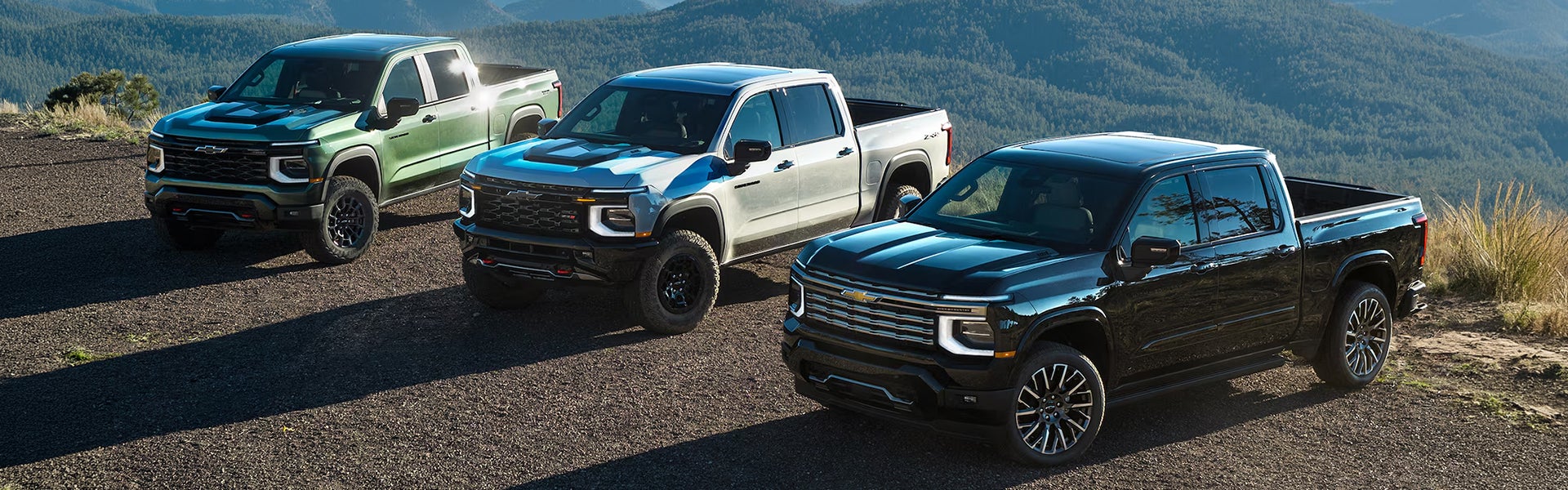
Three 2027 Chevrolet Silverado 1500 pickups parked at a mountain overlook

Why Leasing a Chevrolet Is Now a Smarter Move in Arkansas

When Arkansas city and county sales taxes are charged on a Chevy lease, they apply only to the first $2,500 of payments over the whole lease. At a 2% local rate, that caps the local sales tax on those payments at $50 total. A Chevy lease can also have a lower monthly bill than a loan because the lease payment covers the value the car loses while you drive it, plus charges and taxes. By Allen Tillery Chevrolet Key Numbers When charged on lease payments, city and county sales tax applies to the first $2,500 of payments added together. At a 2% local rate, city and county sales tax on those payments tops out at $50 total. Arkansas’s general state sales tax rate is 6.5%. The $2,500 limit is for city and county tax. On a lease longer than 30 days, you list the Chevy with the county and pay the yearly car tax bill yourself. How much local sales tax do I pay on a Chevy lease? Arkansas already used a $2,500 limit for local sales tax on car purchases. In 2025, Act 1013 spelled out how to use that limit on leases. When local tax is collected on the lease payments, the city and county apply their rates to the first $2,500 of all the payments combined. Say your payments add up to $10,000 over the lease and the local rate is 2%. Two percent of the first $2,500 comes to $50. The other $7,500 in payments falls beyond the local tax limit. That $50 can be charged with the first payment or spread evenly across the lease. Arkansas’s own state sales tax still applies under its lease tax rules. Why can a Chevy lease payment be lower than a loan? A loan pays for the whole Chevy over time. With a lease, a big part of your payment covers how much the Chevy is expected to lose in value during the years you drive it. If a car is worth $35,000 at the start and expected to be worth $23,000 when you give it back, that difference is $12,000. The lease payment covers that difference along with the leasing company’s charges and applicable taxes. A lease can suit you if you like getting a new Chevy every few years and your driving is predictable. Buying gives you the freedom to keep the truck after you pay it off and drive as many miles as you need. Allen Tillery Chevrolet’s finance team can put both options side by side on the same vehicle. The payment calculator estimates a loan payment, and the trade-in tool estimates what your current car might be worth. Who pays the yearly car tax on an Arkansas lease? If you lease the Chevy for longer than 30 days, you tell the county which car you have and pay its annual property tax bill. Listing the car is what the county means when it asks you to assess it. Before the change, the leasing company handled the bill and could pass the cost on to you. Now you pay the county yourself, much as you would for a car you bought. In Hot Springs and the Garland County part of Hot Springs Village, May 31 is the usual deadline to list the car. October 15 is the usual deadline to pay the county bill. That annual bill is part of the cost of driving the Chevy. A lease can also have a charge when you turn it in for damage beyond normal wear, such as a broken mirror or torn seat. Which Chevy lease fits the miles I drive? A Trax or Equinox makes sense for school drop-offs in Benton or Bryant and a Highway 70 commute into Hot Springs. The Traverse and Tahoe have a third row. A two-row Blazer gives a smaller family room for bags or lake gear. For towing, there’s the Silverado 1500 for a boat at Lake Hamilton, a Silverado 2500HD for a heavier trailer at Lake Ouachita, or a 2026 Colorado for a smaller trailer. Forty miles a workday for 250 days adds up to 10,000 miles before any trips to the lake. If your lease includes 10,000 miles a year, those weekday miles use the whole allowance. Chevrolet lists offers by vehicle and ZIP code, including offers on the Equinox EV when available. If you decide to buy, the used inventory includes a search for vehicles under $25,000. See Chevy Lease Offers Common questions about leasing a Chevy in Arkansas Is $2,500 how much I’ll save? The $2,500 is how much of your combined payments the city and county can tax. At a 2% local rate, the tax on that amount is $50. The actual savings vary with the local rate and how the lease is taxed. Did Arkansas lower lease rates? The law changes how much of the lease is subject to local sales tax. The leasing company still sets the rate. If you want a loan quote to see both options, the store has online prequalification. What if I go over my miles? GM Financial charges for extra miles when you return the Chevy over your limit. If the lease allows 30,000 miles and you return it with 31,000, the extra-mile charge applies to 1,000 miles at the price in your lease. Does a leased Chevy come with a warranty? A new Chevy comes with a limited bumper-to-bumper warranty for 3 years or 36,000 miles, whichever comes first. The Chevrolet service department handles eligible repairs for defects under that warranty. Can I buy the Chevy when my lease ends? GM Financial lets you buy the Chevy at lease end. Your lease shows the purchase price. Taxes and fees can add to what you pay to keep it. See what a Chevy lease would cost you. Allen Tillery Chevrolet is at 4573 Central Avenue in Hot Springs. Call (501) 881-4274 or message the sales team for lease and purchase numbers on the same Chevy. Our showroom hours are posted for shoppers coming from Malvern or Arkadelphia. Browse Chevy Lease Inventory

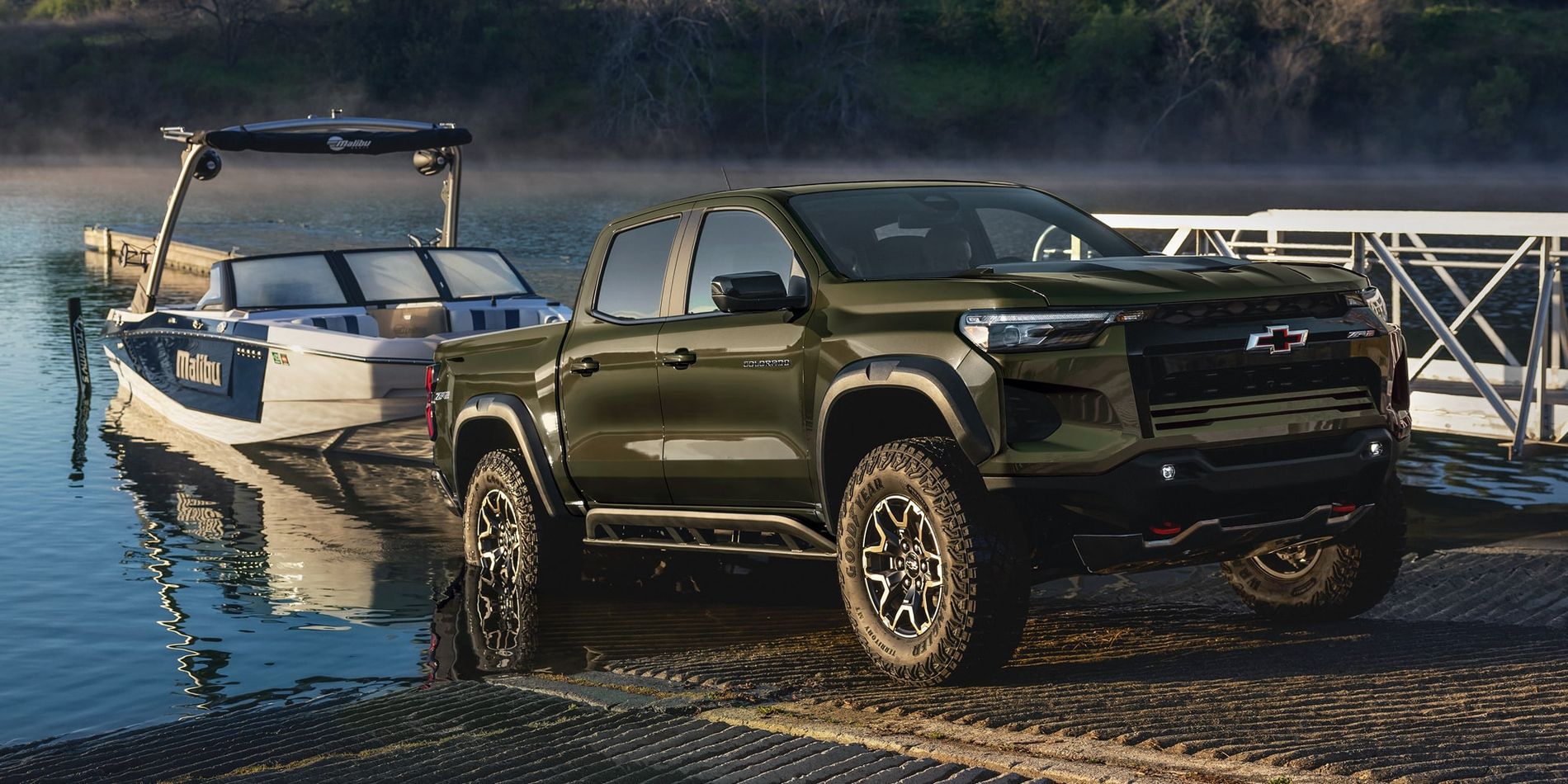
2027 Chevrolet Colorado towing a boat at a launch ramp

2027 Colorado for Malvern and Arkadelphia Boaters

Key Numbers Properly equipped 2.7L Colorado with trailering package: up to 7,700 lbs. Regular ZR2: up to 6,000 lbs when properly equipped; ZR2 Bison: up to 5,500 lbs. 350 hp and 450 lb-ft across the six-model Colorado lineup. Maximum tongue weight with trailering package: 770 pounds; GCWR: 13,250 pounds. For a boat owner near Malvern or Arkadelphia, a 2027 Colorado with the trailering package is the strongest starting point in the Colorado lineup. It pairs a 7,700-lb properly equipped trailer rating with a Crew Cab that seats five. The 350-hp TurboMax and 8-speed automatic handle the drive; the package, hitch and loaded weights determine the trailer limits. Lake Hamilton put the same truck through several jobs in one day: the road to the water, the ramp, the parking area and the drive home. A Trail Boss adds factory rough-road equipment to that routine. ZR2 adds more specialized suspension hardware, with its own lower trailer rating. The 2027 Colorado research hub connects the model choices behind those different jobs. The trailering package is the first boat-owner decision GM lists two different 2.7L trailer limits. Without the trailering package, a properly equipped Colorado is rated for up to 3,500 lbs. With the package and proper equipment, the maximum reaches 7,700 lbs. The combined truck-and-trailer limit rises from 9,100 to 13,250 pounds, and maximum tongue weight rises from 350 to 770 pounds. That difference changes which boats and trailers fit the truck’s published limits. A truck carrying the right package has a higher rating because the whole specified towing setup matters. The Colorado trailering-package limits pair 7,700 lbs of trailer weight with a 770-pound tongue maximum in GM’s 2027 trailer towing supplement. The loaded boat and trailer travel as one weight The trailer’s total includes the boat, trailer, engine, fuel and equipment carried on the trailer. The truck separately carries people, bags, coolers, hitch hardware and the downward load at the trailer tongue. Those are simultaneous loads, even when the bed still has empty space. For an illustration, a loaded boat and trailer weighing 5,000 pounds with a 500-pound tongue load places that 500 pounds on the truck. A hypothetical 450 pounds of people and 150 pounds of truck cargo bring the load carried by the truck to 1,100 pounds before additional hitch or accessory weight. These are arithmetic examples, not weights assigned to a particular boat. Illustrative truck load Hypothetical weight Trailer tongue 500 pounds People 450 pounds Truck cargo 150 pounds Total before additional hitch/accessories 1,100 pounds The Tire and Loading Information label carries the occupant-and-cargo limit used for people, equipment and trailer tongue weight. The receiver and tongue limits apply alongside that capacity. Colorado bed and cabin dimensions include a five-seat Crew Cab and 41.9 cubic feet of cargo volume; the truck’s load label applies to the weight of people and equipment. Trail Boss fits a mixed road-and-ramp truck Trail Boss starts at $41,600 MSRP before destination and fees. Its 2-inch factory lift, 32-inch all-terrain tires and two-speed auto transfer case put rough-road equipment together without changing the engine. It uses the same 350 hp and 450 lb-ft as WT, Custom, LT, Z71 and ZR2. For a Colorado that also spends time on rougher access roads, that factory combination has a clear purpose. Its all-terrain tires serve a different use from the ZR2’s mud-terrain tires. A package-equipped Colorado’s towing ability still follows GM’s published equipment and load limits; the lift itself is not a higher trailer rating. LT is another useful boat-owner choice when remote start and tailgate storage matter in everyday use. LT starts at $36,900 before destination and fees and includes StowFlex storage. The Colorado trims and pricing comparison separates those convenience features from Trail Boss’s suspension and transfer-case hardware. ZR2 and Bison bring separate trailer limits ZR2’s 3-inch factory lift, 33-inch mud-terrain tires and Multimatic DSSV dampers suit the buyer seeking specialized off-road suspension. Its properly equipped trailer maximum is 6,000 lbs, with a 600-pound tongue maximum. ZR2 Bison has its own 5,500-lb trailer maximum and 550-pound tongue maximum. Both use an 11,600-pound gross combined weight rating. Bison adds 35-inch tires, jounce control dampers and skid-plate equipment. A boat owner choosing either truck is buying that terrain hardware while keeping its separate trailer limit. The Trail Boss versus ZR2 comparison places suspension, price and fuel economy beside those towing differences. A towing trip also includes highway miles and parking An 11.3-inch touchscreen and 11-inch digital driver display are standard on every Colorado. Available trailering-app functions and camera views add trailer information and visibility around the truck. Up to ten available views serve several tasks; available rear and surround views are especially relevant to maneuvering a truck-and-trailer combination. The Crew Cab seats up to five, and the bed supplies 41.9 cubic feet of cargo volume. Chevrolet lists overall length at 214 inches and width including mirrors at 84.4 inches. On a trip through Benton and Little Rock, those truck dimensions remain part of the everyday side of ownership after the boat is parked. The EPA rates Colorado 4WD at 19 mpg combined and ZR2 4WD at 17 mpg combined; Bison has a separate 15-mpg figure. These EPA ratings describe their test configurations. A trailer changes load and drag, so the test-cycle number is separate from a fuel estimate for a particular towing trip. Frequent boat towing belongs on the severe-service schedule Frequent boat towing puts the Colorado on GM’s severe-service schedule. The 2027 manual lists transmission-fluid service at 45,000 miles under that schedule and transfer-case fluid at 50,000 miles for applicable four-wheel-drive trucks. Tire rotations remain on a 7,500-mile schedule. The TurboMax uses dexos1-approved full synthetic SAE 0W-30, with approximately 6.0 quarts including the filter. Oil changes follow the Oil Life System, with oil and filter changed at least once annually. The Colorado maintenance and service schedule includes the normal and severe intervals, while the Colorado buying and ownership FAQs answers related equipment questions. Boat-owner questions about the Colorado Which Colorado rating matters for a 6,500-pound loaded boat trailer? A 6,500-pound loaded trailer exceeds the 6,000-lb ZR2 and 5,500-lb Bison trailer maxima. The properly equipped 2.7L Colorado with the trailering package has a 7,700-lb trailer maximum. Tongue weight, truck payload and the 13,250-pound combined limit still apply alongside that trailer rating. Does a 5,000-pound boat trailer put all its weight on the truck? The trailer’s wheels carry much of the trailer load, while tongue weight loads the truck at the hitch. In a hypothetical 5,000-pound trailer example with a 500-pound tongue, that 500 pounds uses truck load capacity. Passengers, bed cargo and hitch hardware also contribute to the truck’s carried load. What hitch rule applies above 6,000 pounds of trailer weight? GM’s 2027 towing supplement requires a weight-distributing hitch above 6,000 pounds of trailer weight. It lists that equipment as optional at or below 6,000 pounds. Receiver, tongue, truck, axle and combined-weight limits continue to apply together, including the package-equipped Colorado’s 770-pound maximum tongue weight. What makes Trail Boss relevant to a boat owner? Trail Boss combines a 2-inch factory lift, 32-inch all-terrain tires and a two-speed auto transfer case. That hardware suits a truck handling pavement and rougher access roads. It retains the lineup’s 350-hp TurboMax, while the properly equipped 2.7L trailering-package configuration provides the Colorado’s highest 7,700-lb trailer rating. Where can Malvern and Arkadelphia boat owners shop Colorado trucks? Allen Tillery Auto Chevrolet sells Colorado trucks at 4573 Central Ave and serves buyers from Malvern and Arkadelphia. Our Chevrolet team provides model inventory, financing and service through the dealership. The family-owned store dates to 1967, with vehicle and service inquiries handled at (501) 881-4274. Allen Tillery Auto Chevrolet is at 4573 Central Ave. Shop Colorado inventory or explore financing with our Chevrolet team at (501) 881-4274. By Allen Tillery Auto Chevrolet

2027 Suburban: Cargo With the Third Row Up

By Allen Tillery Auto Chevrolet The 2027 Suburban’s strongest family feature is the cargo room that remains when the third row stays upright. Chevrolet lists 41.5 cubic feet behind that row, so passenger seats and luggage space can be used together. For a Hot Springs household carrying a full cabin rather than folding seats for every trip, that is a more relevant figure than maximum cargo capacity. Allen Tillery Auto Chevrolet provides the Chevrolet SUV choices at 4573 Central Ave. 2026 Suburban shown. Vehicle dimensions discussed below apply to the 2027 model. Key Numbers The 2027 Suburban has 41.5 cubic feet of cargo room behind the third row. Folding the third row increases cargo space behind the second row to 93.8 cubic feet. Folding the second and third rows creates a maximum 144.5 cubic feet; that is not the full-passenger layout. At 226.3 inches long, Suburban is 15 inches longer than the 211.3-inch 2027 Tahoe. The cargo figure for a full cabin The space behind an upright third row is the figure that matters when those seats are occupied. The Suburban’s 41.5 cubic feet answers that specific question. Its larger maximum cargo number describes a different use of the vehicle, with passenger seating folded out of the way. For a family traveling from Malvern with several people and their bags, this distinction can decide whether a long-wheelbase SUV is worthwhile. A vehicle does not gain useful vacation luggage space merely because its brochure shows an impressive figure with the seats down. The Suburban’s case is that its extra body length remains useful when the household needs the third row, rather than only during an occasional furniture move. Three cargo layouts serve three different jobs Seats in use 2027 Suburban cargo volume Typical purpose All three rows available 41.5 cu. ft. behind row three Passengers and luggage together Third row folded 93.8 cu. ft. behind row two Fewer passengers and larger loads Second and third rows folded 144.5 cu. ft. maximum Bulky cargo These are alternative layouts, not spaces that can be added together. The 144.5-cubic-foot maximum already includes the area described by the smaller measurements. It also does not mean that a family can carry the full maximum cargo load while keeping every passenger position available. That is the practical reason a third-row-up figure deserves attention before the maximum number does. Extra length is the ownership tradeoff The Suburban is 226.3 inches long. Chevrolet lists the 2027 Tahoe at 211.3 inches, making the Suburban 15 inches longer. That difference is one foot and three inches of additional vehicle to accommodate at home and in everyday parking. The longer body can be useful on a trip while remaining a compromise in a shorter garage. A garage’s nominal depth is not necessarily the clear space left after shelving, stored equipment and the closed door are considered. A family buying specifically for third-row luggage space has a strong reason to accept that length. A household using the extra seats only a few times a year has a different balance between daily size and occasional cargo benefit. Seat count and cargo space are separate decisions Chevrolet lists multiple seating arrangements across the Suburban lineup. The number of seats in the particular vehicle still matters, because changing the second-row arrangement changes how the cabin serves a household. The model’s highest advertised seating count should not be applied to every trim. A family carrying adults, children and a grandparent has a different seating requirement from a couple that needs cargo room and only occasional rear passengers. A luggage-space advantage cannot restore a seat removed by the chosen cabin layout. In the same way, folding a section of a rear row is useful only when the household does not need that passenger position on that trip. The purchase works best when both needs are met at once. Why cargo volume does not establish payload Cubic feet describe space, not the weight the vehicle may carry. A large cargo area can hold items whose combined weight reaches a vehicle limit before the area looks full. Passengers and cargo share the vehicle’s carrying capacity, and trailer tongue weight also matters when a trailer is attached. That makes the Suburban’s extra luggage room different from permission to load without a weight limit. A family using several rows and towing has multiple demands on the same vehicle. An engine’s horsepower or a headline towing maximum does not replace the individual vehicle’s loading information. Allen Tillery’s Tahoe research guide provides the shorter SUV’s model context for buyers considering both Chevrolet sizes. When the longer SUV earns its place The Suburban is a strong fit when the third row stays in use and luggage regularly travels with those passengers. It also serves households that alternate between a full cabin and large cargo loads. The value is in using those layouts, rather than buying maximum volume that rarely matters. If most trips use only two rows and limited luggage, the shorter Tahoe remains a sensible part of the comparison. Chevrolet publishes the 2027 Suburban cargo measurements and 2027 Tahoe dimensions separately. Allen Tillery’s Suburban model page and Tahoe model page provide additional model background; those linked pages cover the 2026 vehicles. For an Arkadelphia family that frequently fills the rear seats, the longer SUV solves a specific space problem. For a household that seldom uses them, the everyday footprint may carry more weight in the decision. Neither buyer needs a claim about a release date to make a useful choice. Suburban passenger-and-luggage questions Can the Suburban keep its third row upright and still carry luggage? Yes. Chevrolet lists 41.5 cubic feet behind the third row on the 2027 Suburban. The fit of a specific rigid item still depends on its dimensions and the cargo opening. Can the three cargo figures be added together? No. They describe different seating arrangements. The 144.5-cubic-foot maximum includes the space used in the other measurements; it is not additional volume beyond them. Does a larger cargo area mean a higher payload rating? Not automatically. Cargo volume describes physical space. The individual vehicle’s loading limits govern the combined weight of passengers and cargo. How much longer is the 2027 Suburban than the Tahoe? Using Chevrolet’s listed lengths of 226.3 and 211.3 inches, the Suburban is 15 inches longer. That is one foot and three inches. Is the highest Suburban seating count available on every trim? No. Seating arrangements depend on the trim and equipment. The model-wide maximum should not be treated as the seat count of every Suburban. Choose your family SUV at Allen Tillery Chevrolet Shop new Chevrolet SUVs or contact the Hot Springs dealership about a Suburban that fits your passenger and cargo needs. Shop new Chevrolet SUVs Contact Allen Tillery Chevrolet Allen Tillery Auto Chevrolet · 4573 Central Ave, Hot Springs, AR 71913 · (501) 881-4274

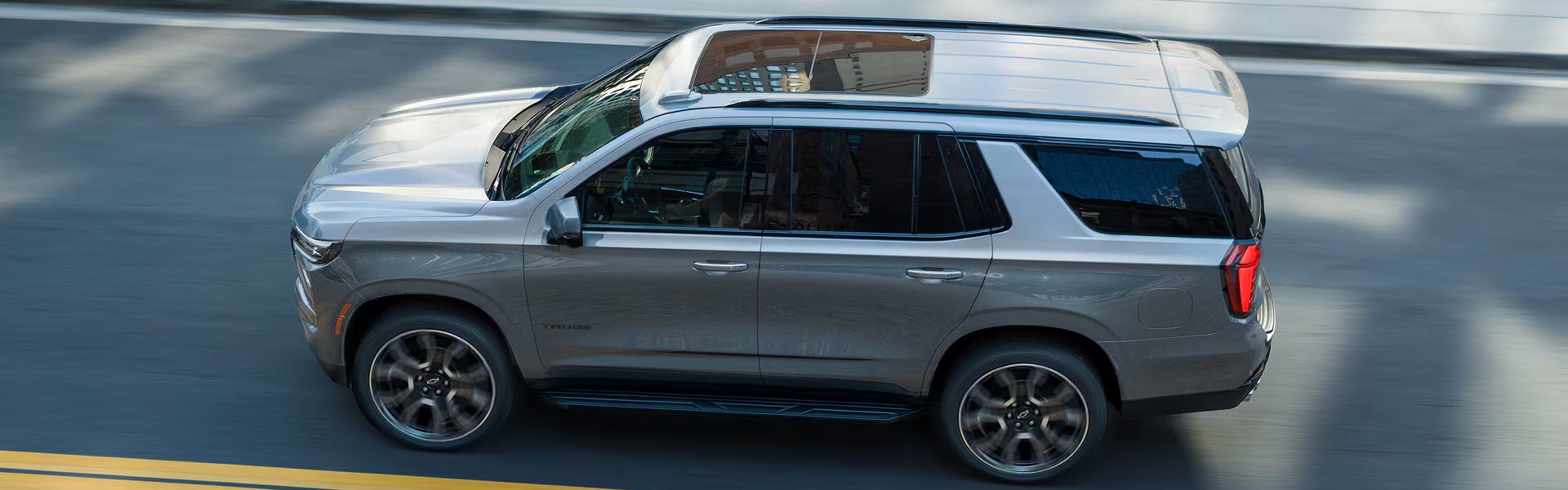
2027 Chevy Tahoe Hot Springs Malvern Arkadelphia dealer AR Arkansas

2027 Tahoe In Stock Before Deer and Duck Season

2027 Chevrolet Tahoe Allen Tillery Chevrolet The 2027 Chevrolet Tahoe is on the lot at Allen Tillery Chevrolet right as fall towing season opens in Hot Springs, and the timing matters more than usual this year: a new RST Performance Edition, diesel-paired Super Cruise, and a truck built to pull a boat trailer to Lake Hamilton for duck season or a camp trailer into the Ouachitas for deer season, all in the same week the model year turns over. See the full 2027 Tahoe Guide for the complete picture, or read on for what the timing means for this season specifically. Quick Answer The 2027 Tahoe is in stock now at Allen Tillery Chevrolet, from $61,200. Max towing is 8,400 lbs (5.3L V8, RWD, Max Trailering Package), enough for most bass and duck boats. The Duramax diesel now pairs with Super Cruise for the first time, for the long haul into the Ouachitas. Cargo runs to 122.7 cu ft, room for a week of deer camp gear with the rear rows folded. Why Fall Is the Right Time to Look at a Tahoe Model-year changeover always lands in fall, and this year it lines up with the two seasons that put the most real load on a full-size SUV in this part of Arkansas: duck season on Lake Hamilton and Lake Catherine, and deer season in the Ouachitas. A Tahoe bought now gets a full season of use before the first hard freeze, and Allen Tillery Chevrolet is stocking both the new 2027 and a discounted 2026 Tahoe side by side, so the timing works whichever year fits the budget. See every Tahoe currently in stock before deciding. What a Duck Season Boat Trailer Actually Needs A johnboat-and-blind rig or a mid-size bass boat with a duck blind kit sits well inside the Tahoe's 8,400-lb tow rating on the 5.3L V8 with the Max Trailering Package, the same rating that's carried unchanged from 2026, so nothing about this year's truck asks a buyer to re-learn the numbers. The in-vehicle trailering app and available camera views matter more at 6 a.m. in the dark at a Lake Hamilton ramp than they do at noon on a Saturday. See the full breakdown on the Specs and Dimensions page. Deer Camp Is a Cargo Problem, Not Just a Towing One Whether it's an ATV trailer into the Ouachita access roads or just gear for a week at deer camp, the Tahoe's 122.7 cu ft of cargo with both rear rows folded (72.5 cu ft with just the third row down) covers a full camp load without a rooftop box. The Z71's off-road-oriented equipment (all-terrain tires, a two-speed transfer case) is the trim built for the access roads themselves, not just the highway to get there. Compare it against the rest of the lineup on the Trims and Pricing page. What's Actually New This Year Change What it means for a hunter or angler RST Performance Edition (new) 433-hp 6.2L V8, Brembo front brakes: more truck for the buyer who wants it Super Cruise + diesel (new pairing) Hands-free driving on the long haul to a lease or a lake house Pricing $500-$3,500 higher than 2026, depending on trim Towing, cargo, body Unchanged: the numbers a buyer already knows still apply If the new RST Performance Edition or the diesel-and-Super-Cruise pairing isn't the deciding factor, the 2026 on the same lot carries the identical towing and cargo numbers for less. Compare both years side by side before the season gets busy. See the 2027 Tahoe in person before deer season opens. View Tahoe Inventory Getting Ready Before the Season Turns A pre-season checkup matters as much as the truck itself: tire rotation, a fluid check ahead of sustained towing loads on grades like Highway 7 through the Ouachitas, and confirming the Max Trailering Package's wiring and hitch on a new purchase. Allen Tillery Chevrolet's service department handles all of it on the same lot where the truck was bought; see Maintenance and Service for intervals and warranty coverage. Frequently Asked Questions Is the 2027 Tahoe in stock now at Allen Tillery Chevrolet? Yes, in Hot Springs, alongside a discounted 2026 Tahoe. What's the Tahoe's tow rating for a boat trailer? Up to 8,400 lbs with the 5.3L V8, RWD and the Max Trailering Package. Which Tahoe trim is best for Ouachita access roads? Z71, the only trim with 4WD standard and off-road-oriented equipment on top of RST-level content. Can I finance a 2027 Tahoe before the season starts? Yes, get pre-approved at Allen Tillery Chevrolet's finance page before your visit. Does the service department handle pre-season trailer checks? Yes, tire rotation, fluid checks and Max Trailering Package inspections are handled at the same dealership. Where can I find more Tahoe questions answered? The 2027 Tahoe FAQ page covers pricing, trims and warranty in more depth.

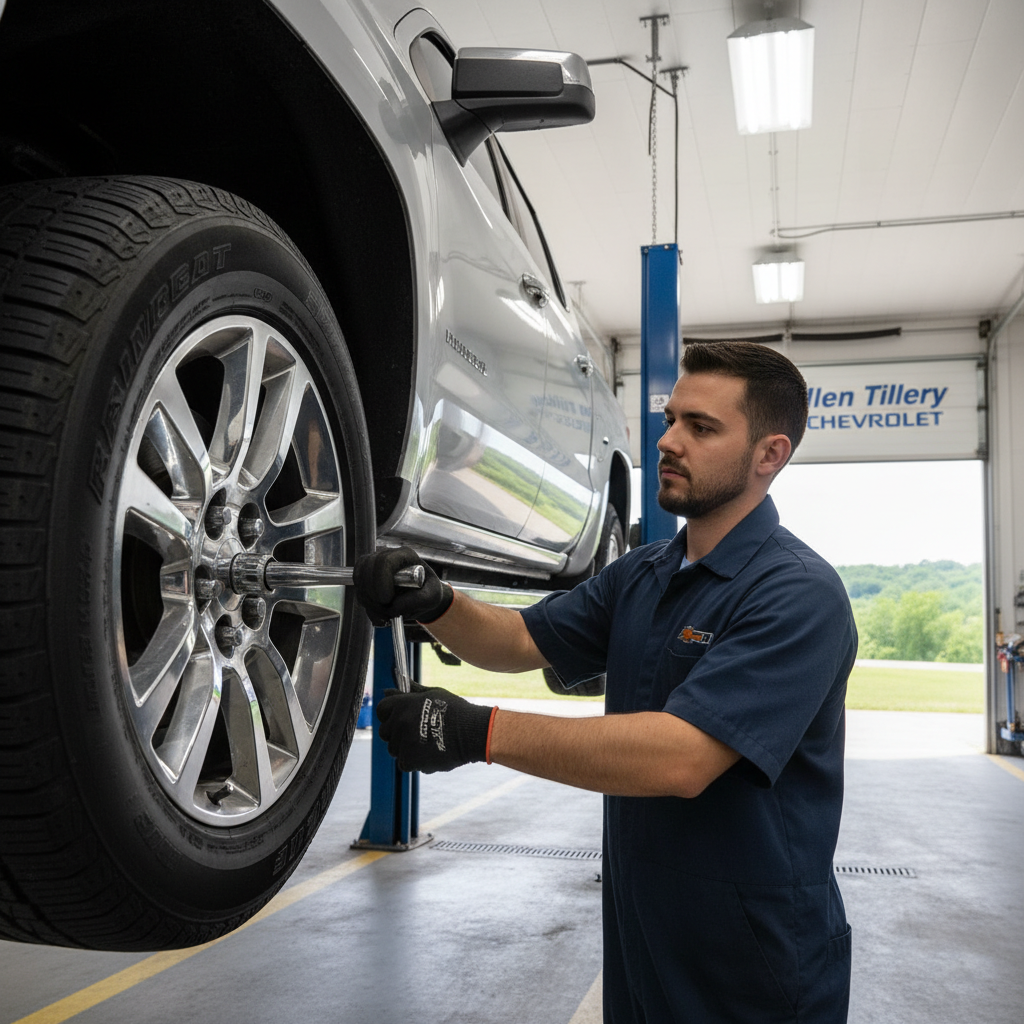
Chevy auto, SUV and truck service and maintenance, Hot Springs, Malvern, and Arkadelphia AR dealer

Chevy Service for Malvern and Arkadelphia Drivers

Chevy Service for Malvern and Arkadelphia Drivers Quick answer: Allen Tillery Chevy's Hot Springs service department covers every Chevy system: oil, tires, brakes, battery, collision and body work. GM-trained technicians and genuine parts are what actually protect a warranty claim or a resale appraisal, not a slogan. Simple out-of-warranty work is fine at a trusted independent shop; warranty, recall and electrical work belongs at the dealer. Schedule online any time; the Service & Parts Specials page carries current pricing. If you're weighing where to get your Chevy serviced from Malvern or Arkadelphia, here's the plain version: Allen Tillery Chevy's Hot Springs service department can handle anything from a routine oil change to full collision repair, and we'll tell you honestly which jobs are worth the drive. Drivers from Malvern and Arkadelphia make the trip regularly, and so do customers from Benton and Little Rock who'd rather deal with a shop that knows their Chevy's full history than gamble on a stranger. GM-trained technicians, genuine parts, and a VIN-tied service record are the actual reasons, not just convenience. What the Hot Springs service department covers The service department handles every system on a modern Chevy, from routine maintenance to body shop and collision repair. Scheduling runs through Schedule Service or Serviceappmt, and the general Chevy Service & Repair Hot Springs page covers the full menu. Routine maintenance: oil, tires, brakes and battery Oil changes and fluid questions are covered on Certified Oil Change Service and Oil Maintenance Hot Springs. Tire work spans New Tires, Tire Finder, the Tirefinder tool, plus dedicated pages for rotation, alignment, tire types and tire basics. Brakes are covered on Certified Brake Service and Brake Maintenance Hot Springs, and battery testing runs through Certified Battery Service and Battery Maintenance Hot Springs. The real case for dealer service The honest advantage is documentation. A GM-trained technician working from factory diagnostic software catches details a generic code reader misses, particularly on newer electrical and driver-assist systems. Genuine GM parts are built to the vehicle's original spec, which matters most on anything safety- or emissions-related, and every visit gets logged against your VIN, which is exactly what a warranty claim or a trade-in appraisal needs later. When an independent shop is fine, honestly If your Chevy is out of warranty and needs simple, non-technical work such as an oil change or a basic brake job, a trusted independent shop in Malvern or Arkadelphia can absolutely handle it well. The dealer earns its premium on warranty-covered work, recalls and factory campaigns, complex electrical or drivetrain diagnostics, and collision repair you want documented for resale. What Hot Springs area driving does to a Chevy Summer here routinely puts triple-digit heat index on a loaded transmission and cooling system, which is harder on a vehicle than the mileage alone suggests. The county roads feeding the lakes around Malvern and Arkadelphia are not flat, and a fifth-wheel or gooseneck load puts real weight on the rear axle regardless of terrain. Regular inspections during a standard visit catch that wear early, while it's still the cheap fix. The GM Maintenance Checklist is a useful reference for exactly what a severe-duty schedule covers. Body shop, windshields, EV service and genuine parts Beyond routine work, the Collision Shop and Body Shop handle everything from a parking-lot dent to a full insurance claim, and Windshield Care covers chip repair and replacement. Chevy's EV lineup runs under EV Pre-Paid Maintenance, separate from standard Pre-Paid Maintenance plans. Cabin and engine filters are covered on Cabin & Engine Air Filter Maintenance, and every job runs on genuine parts, explained on Why Genuine GM Parts Matter. Dealer or independent, and how to book Book here for warranty work, a recall, collision repair, or anything electrical or drivetrain-related on a newer model. An independent shop closer to Malvern or Arkadelphia is a reasonable call for simple routine maintenance out of warranty. Drivers from Benton and Little Rock book here for the same reasons. Current specials post on the general service page, and you can get on the calendar in a couple minutes through Serviceappmt. Common questions Do I have to use the dealer to keep my Chevy's warranty valid? No. Federal law doesn't require dealer service to preserve a manufacturer warranty, as long as the work meets the manufacturer's specifications and you keep records. Warranty-covered repairs themselves do need to go through a GM dealer. How often should tires be rotated in this heat? Every vehicle's exact interval is set by the Owner's Manual, but sustained triple-digit heat accelerates tread wear, so the service team checks tire condition at every visit rather than waiting for a scheduled rotation to catch it. Can the body shop work directly with my insurance company? Yes. The collision and body shop teams handle insurance estimates and claims directly, so you're not managing that process alone. Is genuine GM parts really worth it over aftermarket? For anything safety-, emissions- or warranty-related, yes, since genuine parts are built to the vehicle's original spec. For minor cosmetic items it matters less, and the service team can tell you honestly which category your part falls into. Do you service EVs like the Chevy Bolt? Yes. Technicians are trained on Chevy's EV platforms, and EV-specific maintenance plans are available separately from standard gas-engine plans.

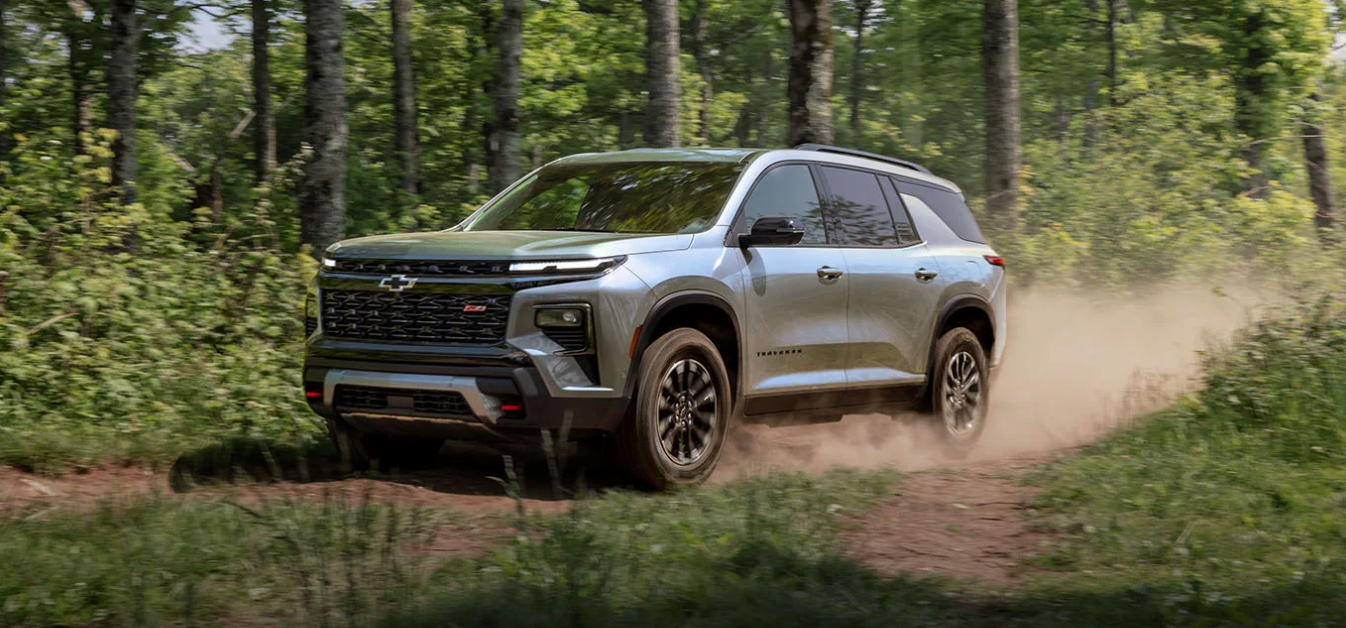
2027 Chevy Traverse For Sale at a Hot Springs Malvern AR Dealership

2027 Chevy Traverse In Stock for Malvern and Arkadelphia Families

Updated September 6, 2026: The 2027 Chevrolet Traverse is on sale now. For Malvern and Arkadelphia families that means the redesigned High Country trim, with its new interior camera and Cabin Glance view of the back seats, should be reaching our lot soon. See what's currently in stock If you are shopping a 2027 Chevrolet Traverse in stock near Malvern or Arkadelphia, the fastest way to the right one is to match the trim to how your family actually uses a three-row SUV, then check what is on the lot. For most local buyers that means a front- or all-wheel-drive LT at $40,800, with the Z71, RS and High Country waiting a step up for drivers who want off-road hardware, sport styling or a premium cabin. The Short Version The LT at $40,800 comes with the 17.7-inch screen, eight-passenger capability and full standard safety. Add all-wheel drive for $2,000 if you tow, hit gravel or drive wet mornings. Step up to Z71 for off-road hardware, RS for sport looks and standard Super Cruise, High Country for the richest cabin. One 328-horsepower turbo engine and up to 5,000 pounds of towing across every trim. Check live inventory, then get pre-approved before you drive to Hot Springs. Start With How Your Family Drives The 2027 Traverse makes the first decision easy, because there is only one engine: a 328-horsepower turbocharged four in every trim. That leaves two questions that actually sort the lineup: whether all-wheel drive is worth it for how a family drives, and how far up the comfort-and-style ladder to go. For a family running the school route through Malvern and the occasional boat weekend, an all-wheel-drive LT answers both without overspending. The full walk-through of every trim is on the Traverse trims and pricing page. What Each Trim Is Really For Trim Starting Price Buy It If LT $40,800 You want the most three-row SUV per dollar for daily family driving. Z71 $49,100 Your weekends run to gravel, ramps and light trails. RS $55,800 You want sport styling and standard hands-free Super Cruise. High Country $56,100 You want the richest cabin in the lineup. Prices exclude the $1,995 destination charge. The Z71 includes all-wheel drive; on the LT, RS and High Country it is a $2,000 option. If capability is the whole point of your search, the Z71's Terrain Mode, skid plate and all-terrain tires are covered in depth on the specs and dimensions page. The Weekend Test: Cargo, Seats and the Boat Here is where the Traverse earns a family's money. It seats up to eight, holds 22.9 cubic feet of cargo behind the third row with everyone aboard, and opens to as much as 98 cubic feet with the rows folded. And it tows up to 5,000 pounds properly equipped, which around here is the difference between keeping the boat at home and keeping it in a rental slip. For a Saturday at Lake Hamilton, that means the whole family, the cooler and the boat make the trip in one vehicle. The everyday numbers behind that are on the Traverse overview. Why Malvern and Arkadelphia Families Shop Here Allen Tillery Auto Chevrolet has sold and serviced Chevrolets from 4573 Central Ave in Hot Springs since 1967, an easy drive up US-270 from Malvern or over from Arkadelphia. Buying close to home matters most after the sale, because the same service department that preps your Traverse handles the covered first oil change and every visit after it. Ownership costs, intervals and warranty terms are laid out on the maintenance and service page, and quick answers to the common questions are gathered on the Traverse FAQ page, and the full Traverse research hub pulls every page together in one place. Ready to Shop the Lot? The best next step is to see which trims and colors are actually in stock, then lock a payment before you make the drive. See the 2027 Traverse inventory, get pre-approved online, run the numbers on the payment calculator, or call the team at 501-881-4274 to set up a test drive. Bring the whole family; the third row is the part they will want to try. Written by the Allen Tillery Auto Chevrolet team, Hot Springs, AR. We have sold and serviced Chevrolets from 4573 Central Ave since 1967. 2027 Traverse Buyer Questions What is the best 2027 Traverse trim for a family? For most families the LT at $40,800 is the sweet spot: it comes with the 17.7-inch touchscreen, seven- or eight-passenger seating and the full standard-safety suite. Add all-wheel drive for $2,000 if you tow or drive wet roads. Families who want off-road capability step up to the Z71. How much can the 2027 Traverse tow for a boat weekend? Up to 5,000 pounds properly equipped, across every trim with the included trailering equipment. That covers a typical fishing boat and trailer for a day on Lake Hamilton, plus the family and gear inside. Is the first maintenance visit covered on a new Traverse? Yes. The first scheduled maintenance visit in the first year, an oil change, tire rotation and multi-point inspection, is included, alongside 3 years or 36,000 miles of bumper-to-bumper coverage and 5 years or 60,000 miles on the powertrain. Which Traverse trims come with Super Cruise? The RS and the High Country include Super Cruise hands-free driving as standard for 2027, with a three-year OnStar plan, and it is available elsewhere in the lineup. It works on compatible mapped highways such as parts of Interstate 30. Does Allen Tillery have the 2027 Traverse in stock near Malvern and Arkadelphia? Yes, the 2027 Traverse is regularly in stock at 4573 Central Ave in Hot Springs, a short drive for Malvern and Arkadelphia families. Check the live inventory online or call 501-881-4274 to confirm the trim and color you want.

2027 Chevrolet equinox in hot Springs AR dealership

Best 2027 Chevy Equinox for a Hot Springs Family

The all-wheel-drive Equinox LT, at $31,000 excluding destination, is the 2027 Equinox we put most Hot Springs families in first: it carries the biggest cargo hold in the lineup at 63.5 cubic feet, plus heated seats standard for the drive in from Malvern or Arkadelphia. Add a Saturday that ends at DeGray Lake, and that's the whole decision. Six vehicles wear the Equinox name for 2027 across two nameplates, and only a few of them are genuinely worth cross-shopping for a family here. Allen Tillery Chevrolet has been family owned since 1967, and this is the order we actually walk buyers through it. The Short Answer The all-wheel-drive Equinox LT at $31,000 excluding destination is what we put most families in first: heated front seats and a heated steering wheel are standard, plus the largest cargo hold in the lineup at 63.5 cu. ft. The gas Equinox holds more cargo than the Equinox EV both ways: 63.5 cu. ft. against 57.2 with the seats folded, 29.8 against 26.4 behind the second row. The gas Equinox gives the back seat more room, 39.9 in. of legroom against 38.0 in.; the Equinox EV gives the front seats more, 41.7 in. against 40.9 in. Ground clearance is 8.08 in. on the gas Equinox and 6.4 in. on the Equinox EV, the difference you feel on a gravel lake-access road. If you can charge where you park, the Equinox EV LT 2 at $41,795 excluding destination adds heated seats, a heated wheel, HD Surround Vision and wireless phone charging. The hatch matters before the trim level The single number that decides more of these purchases than anything else is 63.5 cubic feet, what the gas Equinox holds with the second row folded flat. The Equinox EV, even riding on a longer wheelbase, holds 57.2. Behind the second row, where the cooler, the folded stroller and the week's groceries actually sit, it's 29.8 cubic feet on the gas car against 26.4 on the EV. That gap runs opposite to what the exterior lengths suggest, and it's worth settling before anything else. A family loading up for a weekend at DeGray Lake, or hauling supplies home from a Saturday errand run, wants the gas Equinox's shape. Every dimension for both cars, side by side, is on the 2027 Equinox specs and dimensions page. Then measure the back seat Legroom splits the other way. The gas Equinox gives the second row 39.9 inches of legroom and 39.2 inches of headroom; the Equinox EV gives it 38.0 and 38.5, and hands the difference to the front seats instead: 41.7 inches of legroom and 58.6 inches of shoulder room up front. So it comes down to who's sitting where. Two adults up front with a car seat behind them ride better in the EV's cabin. A family with a teenager stretching out in row two, or a rear-facing seat behind a tall driver, wants the gas car's extra 1.9 inches. Ten minutes with both, with whatever you actually carry, settles it faster than any brochure. The DeGray Lake run Arkadelphia sits close enough to DeGray Lake, a straight run down Highway 7, that a Saturday there is routine, not a road trip, and some of the roads down by the marina and the boat ramps turn from pavement to gravel and washboard before you park. That's exactly where the gas Equinox's 8.08 inches of ground clearance pays off against the Equinox EV's 6.4: an inch and a half is the difference between rolling smoothly over a rutted lake-access road and picking your way across it. All-wheel drive is a flat $2,000 on any gas trim: an Equinox LT with AWD runs $31,000, an RS or ACTIV $35,900, both excluding the $1,995 destination charge, and it's available across the Equinox EV lineup too. The ACTIV trim adds all-terrain tires, its own suspension tune and standard roof rails, and it's the trim we point lake-day families toward first. Gas or electric for the daily commute If you can put a 240-volt outlet where the car parks overnight, the Equinox EV handles a family commute easily: 319 EPA-estimated miles of range on front-wheel drive, a full charge in about 9.5 hours while everyone's asleep, and a standard NACS port that reaches a wider public charging network than the outgoing car did. A daily run from Malvern into town and back doesn't put a dent in that. If you park on the street, share a driveway, or just don't want to think about it, the gas Equinox's 14.8-gallon tank and 400-mile range make the question disappear entirely. Neither choice is a compromise; it just depends on where the car spends its nights, and we'll ask before we recommend anything. The full side-by-side, including running costs, is on the 2027 Equinox gas vs EV page. What we'd put a family in The all-wheel-drive Equinox LT at $31,000 excluding destination is where we start almost every family conversation, and it isn't a stripped-down starting point. Heated front seats and a heated steering wheel are standard on the LT, the 11.3-inch touchscreen runs Google built-in, and Chevy Safety Assist comes standard across the whole Equinox lineup. The 1.5L Turbo making 175 horsepower is the same engine every gas trim uses, so nothing further up the line is quicker. The ACTIV at $35,900 excluding destination with all-wheel drive is the one for a family that loads up and then points the car somewhere unpaved: all-terrain tires, its own suspension tune, and standard roof rails for a kayak or a cargo box. The Equinox EV LT 2 at $41,795 excluding destination is the pick for a family that can charge at home and wants the comfort content that comes with it: heated seats, a heated wheel, heated mirrors, HD Surround Vision and wireless phone charging, plus 8 years or 100,000 miles of coverage on the battery. The full trim-by-trim breakdown for both nameplates is on the 2027 Equinox trims and pricing page. What it costs to keep A Hot Springs family will not notice much difference in year one. Whichever Equinox comes home, the included visit lands at 12 months or 12,000 miles and covers the four-tire rotation and the Multi-Point Vehicle Inspection either way; only the gas car adds an oil and filter change to that same stop, since the EV has none to give. Past that first visit, the gas Equinox settles into rotations every 7,500 miles while the EV needs nothing from the service bay but tires and brakes. Warranty coverage doesn't change between the two: 3 years or 36,000 miles bumper-to-bumper on both, and the corrosion policy runs to 6 years or 100,000 miles against rust-through. That matters here, where a lot of the driving mixes Arkansas summer heat with gravel dust off the lake roads and the occasional January ice storm. Full intervals and warranty terms are on the Equinox maintenance and service page, and you can book either car in for service any time at schedule-service.html. Frequently Asked Questions How much cargo space does the 2027 Equinox actually have? The gas Equinox holds 63.5 cubic feet with the second row folded and 29.8 cubic feet behind it. The Equinox EV holds 57.2 cubic feet folded and 26.4 behind the second row. Full dimensions for both are on the specs and dimensions page. Should a family here buy the gas Equinox or the Equinox EV? Both are good family vehicles built on the same values; it comes down to where you park at night. A family that can charge at home is well served by the Equinox EV's 319-mile range and quiet, low-maintenance driving; a family without home charging gets the same ease from the gas Equinox's 400-mile range and 14.8-gallon tank. See the full comparison on the gas vs EV page. Which 2027 Equinox trim do most families choose? Most of the families we work with choose the all-wheel-drive Equinox LT at $31,000 first: heated front seats, a heated steering wheel and the full 63.5 cubic feet of cargo room come standard on that trim. Families headed to the lake often step up to the ACTIV for its all-terrain tires and roof rails. The full trim ladder is on the trims and pricing page. What maintenance comes with a new 2027 Equinox? Both the gas Equinox and the Equinox EV include one scheduled maintenance visit at 12 months or 12,000 miles: a four-tire rotation and a Multi-Point Vehicle Inspection, plus an oil and filter change on the gas car, and 3 years/36,000 miles of bumper-to-bumper coverage. The Equinox EV adds 8 years/100,000 miles of coverage on the battery and electric components. Full terms are on the maintenance and service page. Does Allen Tillery Chevrolet have the 2027 Equinox in stock? Yes, both the gas Equinox and the Equinox EV are regularly in stock. See what's currently on the lot, or see the full 2027 Equinox buyer's guide for trims, specs and everything else in one place. Come fit the car seat yourself The fastest way through all of this is twenty minutes with both cars and whatever you actually carry: the car seat, the cooler, the dog crate. We're at 4573 Central Ave in Hot Springs, and you can reach us at 501-881-4274. See the 2027 Equinoxes in stock, look at the Equinox EV, book a back-to-back test drive, or get pre-approved so the numbers are settled before you arrive. The complete 2027 Equinox and Equinox EV buyer's guide, covering trims, specs, service and more, starts at our Equinox buyer's guide, the full model overview is on the 2027 Equinox for sale page, and more answers are on the Equinox FAQ page. Current offers are on our specials page, and financing questions go to our finance team.

Hauling Horses to Oaklawn in a Silverado 2500HD

A loaded three-horse gooseneck rig sits comfortably inside what a 2026 Chevrolet Silverado 2500HD will pull, and for most people hauling around Hot Springs the deciding question is not whether the truck can do it but which cab, bed and engine you want under you for the trip. A Crew Cab 2500HD is rated to 18,500 pounds on a conventional hitch when properly equipped, and a Duramax truck with the Max Trailering Package and a long bed reaches 22,050 pounds on a gooseneck or fifth-wheel hitch. We sell trucks to people who haul livestock for a living and to people who take two horses to Oaklawn Racing Casino Resort a few times a season, and those are different trucks. This post walks the haul the way you actually do it — the hitch on the ball, the rig behind you, the road between your barn and the paddock — and lands on which configuration fits which version of that. A properly equipped Crew Cab 2026 Silverado 2500HD tows up to 18,500 pounds on a conventional hitch. Properly equipped with the 6.6L Duramax and the Max Trailering Package, the lineup maximum is 20,000 pounds conventional and 22,050 pounds on a gooseneck or fifth-wheel hitch. A gas Crew Cab carries 3,426 pounds of payload; the lineup maximum is 3,926 pounds on a Work Truck Regular Cab long-bed rear-drive with the gas V8. An integrated trailer brake controller is standard on all six trims, including the entry Work Truck. The 6.6L Duramax turbo-diesel makes 470 horsepower and 975 lb-ft and pairs with an Allison 10-speed automatic. What a Horse Trailer Actually Asks of a Truck Livestock is live weight. It shifts when you brake, it leans into a curve, and it does not settle the way a boat or a stack of lumber does. That puts the demand on three numbers rather than one, and towing capacity is only the first of them. The second is payload, because a gooseneck hitch puts the trailer's pin weight straight down onto your rear axle, and that weight comes out of the same budget as passengers, tack, feed and anything in the bed. A gas Crew Cab starts with 3,426 pounds of payload to spend. The lineup maximum of 3,926 pounds belongs to a Work Truck Regular Cab long-bed rear-drive with the gas V8, which is the lightest truck in the range and therefore the one with the most left over. The third is the hitch itself. A bumper-pull two-horse trailer rides on a conventional receiver; a three-horse or four-horse with living quarters almost always rides on a gooseneck, and that is a different rating and a different bed. The full ladder by cab, bed and engine is laid out on our Silverado 2500HD towing and payload page, and the specifications page carries the bed lengths and weights those ratings depend on. The Three Configurations Worth Looking At Every 2026 Silverado 2500HD can be ordered with either engine, on any trim, so this is a question about cab, bed and powertrain rather than about badge. Three builds cover almost everyone who pulls a horse trailer in Garland County. Build What it suits Headline figure Gas V8 Crew Cab, standard bed Two horses on a bumper-pull, a few trips a season, family in the back seat 401 hp, 464 lb-ft; 3,426 lbs payload Gas V8 Crew Cab, long bed A gooseneck three-horse, weekend distances, room for the hitch in the bed Up to 18,500 lbs conventional, properly equipped Duramax Crew Cab, long bed, Max Trailering Living-quarters trailers, sustained highway hauls, hauling for a living 470 hp, 975 lb-ft; 22,050 lbs gooseneck The gas 6.6L V8 makes 401 horsepower and 464 lb-ft and is the standard engine across the range. The available 6.6L Duramax turbo-diesel makes 470 horsepower and 975 lb-ft and runs through an Allison 10-speed automatic. The difference you feel with a trailer behind you is torque low in the rev range and how little the truck has to work to hold a speed, which is the whole subject of our engines and performance page. Which trim you wrap around that engine is a separate decision, and the trims and pricing page prices every rung from the $45,900 Work Truck up. The Roads You Will Actually Be On The haul from a barn outside Hot Springs to the Oaklawn paddock is short, and short hauls test a truck in ways a spec sheet does not show: backing a gooseneck into a tight lot, holding a lane on a crowned two-lane, stopping a live load at a light you did not expect to catch. Longer runs change the calculus. Coming up from Arkadelphia or across from Malvern puts you on Interstate 30 with a loaded rig at highway speed, and that stretch is where the diesel's torque and the exhaust brake stop being a line item and start being the reason you arrive unbothered. An integrated trailer brake controller is standard on every trim, so the entry Work Truck leaves the lot ready to wire a trailer rather than needing a shop visit first. Cab choice matters more than people expect on these trips. A Crew Cab seats six, which covers the riders and whoever came to help load, and it is the cab almost everyone actually orders. A Regular Cab seats three and returns the most payload, which is the trade that makes it the lineup's payload champion. Which One Fits Your Season Two horses, a bumper-pull, a handful of trips a year. The gas Crew Cab is the right truck. It has the capability the rig asks for, the back seat gets used, and every dollar you do not spend on the diesel is available for the trim you actually want to sit in. A gooseneck three-horse and regular weekends. Go long bed. The bed length is what makes the gooseneck hitch work properly, and it is the harder thing to change later. Either engine will pull it; pick the engine on how far you go, not on the trailer. Living quarters, or hauling as work. Duramax, long bed, Max Trailering Package. That is the build behind the 20,000-pound conventional and 22,050-pound gooseneck figures, and it is the one that treats a long haul as routine. If you are still weighing whether you need a 2500HD at all, the Silverado 1500 and 2500HD comparison covers where the line sits, and the 2500HD and 3500HD comparison covers what the next step up buys. Service intervals and coverage for either engine are on the maintenance and reliability page, and if your season also involves a rough track to a back pasture, the ZR2 page covers the off-road hardware. Come Weigh It Against Your Own Rig Bring the trailer. Bring the weight slip if you have one. We will put your numbers against the cab, bed and engine combinations and tell you which build fits, and you can drive it with the hitch on before you decide. Start with the Silverado 2500HD inventory, schedule a test drive, or start financing when you have picked the truck. The full research set lives on the 2026 Silverado 2500HD guide, and quick answers are on the FAQs page. Every configuration and price is on the Silverado 2500HD overview. Horse Trailer and Silverado 2500HD FAQs Can a Silverado 2500HD pull a loaded three-horse gooseneck? Yes. Properly equipped with the 6.6L Duramax and the Max Trailering Package, the 2500HD is rated to 22,050 pounds on a gooseneck or fifth-wheel hitch, which a loaded three-horse rig sits well inside. Weigh your own trailer loaded, because water, feed and tack move the number more than people expect. Do I need the diesel, or is the gas V8 enough? Not for a bumper-pull two-horse trailer. The 6.6L gas V8 makes 401 horsepower and 464 lb-ft and is rated to 16,000 pounds on a conventional hitch when properly equipped. The Duramax earns its place on sustained highway hauls and heavier gooseneck rigs. How much payload do I have for pin weight and tack? A gas Crew Cab starts with 3,426 pounds. The lineup maximum is 3,926 pounds on a Work Truck Regular Cab long-bed rear-drive with the gas V8. Passengers, tack, feed and gooseneck pin weight all draw on the same figure. What comes standard on the entry Work Truck? An integrated trailer brake controller is standard on all six trims, so the $45,900 Work Truck is wired for a trailer as delivered rather than needing a shop visit first. What does servicing a Duramax involve compared with the gas V8? Both follow the same first scheduled visit at 12 months or 12,000 miles. The Duramax carries five years or 100,000 miles of diesel powertrain coverage, and the intervals and coverage for both engines are set out on the maintenance and reliability page.

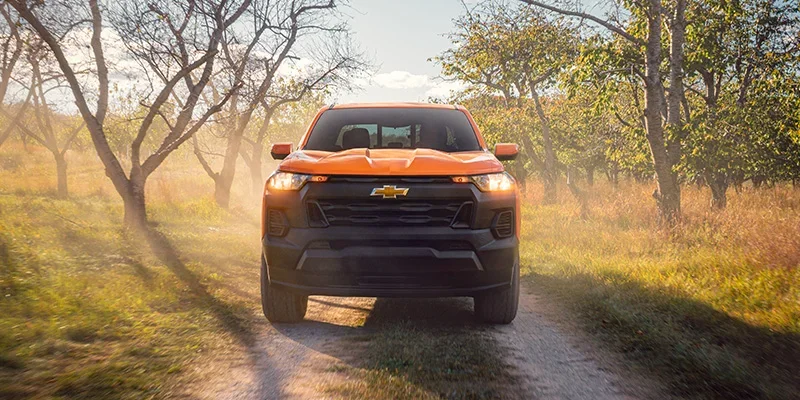
Orange Colorado

Moving From a Full-Size Truck to a Colorado in Hot Springs

Key Numbers A 2026 Colorado is 214 inches long, roughly a foot and a half shorter than a half-ton crew cab. Height runs 78.8 to 82.7 inches against a standard 84-inch garage door opening. A properly equipped crew cab tows 7,700 lbs; the bed is 5 feet with 41.9 cubic feet. All six trims share one engine: 310 horsepower and 430 lb-ft. EPA combined runs 21 mpg in 2WD down to 16 on a ZR2 Bison. Every spring in Hot Springs the same conversation happens on this lot. Somebody has been driving a half-ton for eight years, the kids have moved out or the business has changed shape, and they have started to notice how much of the truck they are not using. It parks badly at the Central Ave shops. It fills the carport. It drinks. And the trailer behind it on the weekend is a bass boat that weighs less than the truck's own payload rating. That buyer is not downsizing. They are right-sizing, and the 2026 Chevrolet Colorado is usually the answer. Here is what actually changes when you move from a full-size truck to a midsize in Hot Springs, based on the questions we get asked across the desk rather than on a spec sheet. You lose about a foot and a half, and you notice it every single day A 2026 Colorado measures 214 inches long on a 131.4-inch wheelbase and 84.4 inches wide including the mirrors. A half-ton crew cab is roughly a foot and a half longer. That sounds academic until you try to park both in a downtown Hot Springs space or back both into a carport poured when a sedan was the assumption. Height is the one people forget to check, and it is the one that matters most in an older Garland County house. The Colorado runs 78.8 to 82.7 inches tall depending on trim, and a standard residential garage door opening is 84 inches. Everything in the lineup clears it. A lifted trim clears it by inches rather than feet, and a roof rack spends those inches. Go measure your opening before you shop, not after; the full dimension set is on the Colorado specs and dimensions page. You do not lose the engine you were worried about losing This is the part that surprises full-size owners. Every 2026 Colorado, from the $32,400 Work Truck to the ZR2, uses the same 2.7L TurboMax turbocharged four-cylinder making 310 horsepower and 430 lb-ft of torque through an 8-speed automatic. Every one of them is quick. The trim ladder buys drivetrain hardware, ride height and equipment, and it never buys power. Coming out of a V8, the number to look at is torque rather than cylinder count. 430 lb-ft is real, it arrives low, and on the grade out of a boat ramp it is what you actually feel. The Colorado overview walks the whole lineup if you want the wider picture first. The honest question is what you tow, and for most people here the answer fits A properly equipped Colorado crew cab is rated at 7,700 lbs in 2WD or 4WD, and every 2026 Colorado is a crew cab, so that is the figure that applies to the truck you would actually order. A ZR2 crew cab is rated at 6,000 lbs. Set that against what genuinely goes out to Lake Hamilton and Lake Catherine on a Saturday: an aluminum bass boat on a single-axle trailer, a pair of side-by-sides on an open deck, a teardrop camper. All of it sits inside the rating with margin. Where a midsize stops is a two-horse gooseneck or a car hauler with a car on it, and if that is your weekend then you want a Silverado and we will tell you so. Everything in between is worked through load by load on the Colorado towing capacity page. One thing worth knowing before you sign anything: payload counts passengers, fuel and tongue weight, not just what is in the bed. On a midsize that arithmetic is tighter than you are used to. A WT, Custom or LT in 2WD carries 1,710 pounds, and the range across configurations runs 1,445 to 2,046 pounds. The bed is shorter, and the tailgate is smarter about it Five feet, on every trim. If you have been carrying eight-foot material in a six-and-a-half-foot bed you were already dropping the tailgate, and the Colorado's mid-position tailgate stop is built for exactly that: it holds at an intermediate position rated to 500 lbs so the load rides supported rather than balanced on the tailgate edge. Around it you get 41.9 cubic feet of bed volume, up to 17 tie-downs, a built-in measurement tool stamped into the tailgate, cargo bed lighting and an available 120-volt outlet. A spray-on liner is a $475 option and it is the one most work buyers take. You gain the screen, and you gain it on the cheapest one An 11.3-inch touchscreen with Google built-in and an 11-inch digital driver display are standard on every 2026 Colorado, including the Work Truck. So are wireless Apple CarPlay and Android Auto, and so is Chevy Safety Assist, a package of six driver aids. Blind spot detection is standard too. If your current truck is eight years old, this is the single biggest day-to-day upgrade in the move, and it is worth understanding that none of it is a trim you have to climb to. Google Maps and Google Assistant run natively in the truck, so navigation works whether or not your phone is connected. The tech and safety page has the full feature grid and both sets of crash-test results, published in full. So which one should you buy? For most people making this move in this market, the Trail Boss, from $40,500 before destination. It is the one step in the lineup that adds four-wheel drive as standard, a two-speed transfer case with low range, a 2-inch lift, 32-inch all-terrain tires and a transfer case shield together, and it is what tends to be on our ground. It is also the trim that handles the thing a full-size owner will miss least: standing water across the low crossings after a spring storm, and the gravel county roads that feed both lakes. If your truck is mostly a commuter with a trailer on weekends, the LT is the better match and the ride is quieter on all-season tires. If you want the look without the off-road hardware, the Custom is $1,145 over the Work Truck. If you have somewhere real to wheel, the ZR2 adds locking differentials at both ends and 10.7 inches of clearance. All six are laid out with what each step adds on the trims and pricing page, and the Trail Boss and ZR2 are compared directly on the ZR2 and Trail Boss page. What it costs to live with Running cost on this truck is almost entirely a drivetrain and tire decision, because the engine never changes. EPA combined is 21 mpg in 2WD, 19 in 4WD, 17 on a ZR2 and 16 on a ZR2 Bison, per fueleconomy.gov. Coming from a V8 half-ton, that is the number that will make you happiest about the move. Maintenance runs off the Engine Oil Life System rather than a fixed mileage, tires rotate every 7,500 miles, and your first maintenance visit is covered in the first 12 months. Coverage is 3 years or 36,000 miles bumper-to-bumper and 5 years or 60,000 miles on the powertrain. The maintenance page covers the ownership side properly. Come drive one against what you have now The best version of this decision takes about twenty minutes. Bring your current truck, drive a Colorado, and park them next to each other in our lot at 4573 Central Ave. Most people know inside a mile. We have been selling trucks here since 1967, and buyers make the run from Malvern, Arkadelphia, Benton and Little Rock to do exactly this. Start a trade appraisal before you come and we will have a real number waiting; get pre-approved and the financing is settled before you drive anything. Call 501-881-4274, schedule a test drive, or just look at what is on the lot right now. Questions we get about moving to a Colorado Will I regret the shorter bed? Most people do not, because the mid-position tailgate handles long material and the 5-foot bed is 41.9 cubic feet. If you regularly haul full sheets flat or need a second cab configuration, that is a genuine reason to stay full-size. Is a four-cylinder enough after a V8? 430 lb-ft of torque is the figure to judge it by, and it is standard on all six trims. It arrives low in the rev range, which is where towing and merging actually happen. Does the Colorado hold its value? Resale depends on trim, condition and mileage more than on nameplate. Bring us your current truck for a written appraisal and we will show you the numbers side by side rather than guess. Which trims come with four-wheel drive? Trail Boss, Z71 and ZR2 have it as standard with a two-speed transfer case. WT, Custom and LT are rear-wheel drive standard with four-wheel drive available, and that available system is single-speed with no low range. How is servicing different from a full-size truck? The interval is set by the Engine Oil Life System rather than a fixed mileage, and it takes dexos1 full synthetic. A turbocharged engine is worth taking that indicator seriously on. You can book service with us whether or not you bought the truck here. Where can I actually use a Trail Boss or a ZR2 around here? The Talimena Scenic Drive and Highway 7 through the Ouachitas are excellent long runs with gravel spurs off them. For the national forest, check the current Forest Service motor vehicle use map before planning a route; designations change and a road on a map is not permission to drive it. Is there a Colorado question you have not answered? Probably not. The Colorado FAQ page runs to thirty-nine of them, and the Colorado research hub collects every page in one place.

2026 Chevrolet Silverado 1500 parked before a test drive at Allen Tillery Chevrolet

Silverado 1500 Test Drive Route in Hot Springs

Silverado 1500 · Buying Local Most truck test drives are too short and too flat to tell you anything. Fifteen minutes around a parking lot and a straight stretch of four-lane will confirm that the truck runs, and almost nothing else. We're lucky here: within about twenty minutes of the lot on Central Avenue you can put a Silverado 1500 through a steep climb, a tight downtown crawl, a set of real curves, and a highway merge. That's a drive that actually answers questions. Below is the route our salespeople use, what to pay attention to at each stage, and the handful of things worth deciding before you show up so you spend your time driving instead of narrowing things down in the lot. If you want the full picture on the truck itself first, our complete 2026 Silverado 1500 guide collects everything in one place. In this post Decide two things before you arrive · The route, stop by stop · What to feel for · If you're driving other trucks too · After the drive · Questions we get Decide two things before you arrive You'll get far more out of an hour here if you walk in with two answers ready: which cab and bed you want, and which engine you're curious about. Everything else can be sorted in person. Cab and bed is the one that's hard to undo. A Crew Cab with the short bed is the easy default and it's what most families end up in, but if you're regularly hauling sheet goods or long lumber, the longer bed changes the truck's usefulness more than any option package will. Cargo space runs up to 89.1 cubic feet with the 8-foot bed, and that's a number you feel every weekend rather than once a year. Our specs and dimensions breakdown has the bed and cab measurements side by side if you want to check them against your garage or your trailer before you come. Engine is the fun one, and it changes the drive more than anything else on the list. There are four: the 2.7L TurboMax four-cylinder (310 hp, 430 lb-ft), the 5.3L V8 (355 hp), the 6.2L V8 (420 hp), and the 3.0L Duramax turbo-diesel (305 hp, 495 lb-ft). They feel like four different trucks, especially on a climb. Pick one to drive and, if you're torn, ask for a second — that's a normal request and we'd rather you be sure. The trim-by-trim comparison shows which engines pair with which trims across the nine-trim lineup, from the work-focused WT up through the off-road ZR2. Worth knowing on price so nothing surprises you: the lineup starts at $36,900 and runs to $71,800, MSRP excluding the $2,795 destination charge. If you'd like to see what that looks like as a monthly figure before you drive, the payment calculator takes about a minute. The route, stop by stop The whole loop runs about twenty minutes of driving. You can shorten it or stretch it, and if you'd rather drive somewhere specific (your jobsite, your boat ramp, the hill you actually live on), just say so. That's usually a better test than anything we'd pick. 1. Central Avenue, first five minutes. Straight out of the lot into stop-and-go. This is the least exciting part of the drive and it's where a lot of trucks quietly annoy you: how the brakes take up, how much of the hood you can see over, whether the truck creeps smoothly in traffic, how big it feels between the lines. Tourist season makes this stretch an honest test of low-speed manners. 2. The climb up West Mountain. Two minutes later you're on a real grade with switchbacks and a low speed limit. Nothing on flat ground tells you what an engine feels like under load, and this does. It's where the difference between the four engines stops being a number on the page and becomes something you can feel in your back. Coming down is just as useful: pay attention to how the truck holds its speed and how the transmission handles the descent without you riding the brake. 3. North on Highway 7. Curves, elevation changes, and enough room to let the truck settle at speed. This is where ride quality separates the trims: how the suspension handles mid-corner bumps, how much road noise reaches you, whether the seat still feels right twenty minutes in. If your commute involves mountain two-lane, this stretch is a fair preview of it. 4. Highway 70 and the merge back. A proper on-ramp and some open four-lane. Merge hard on purpose. If you're looking at a High Country, this is also where you'd want to try Super Cruise, the hands-free driving system available on the High Country, on a compatible stretch. It's a feature that's difficult to appreciate from a description and obvious after five minutes of using it. 5. Optional: bring your trailer. If towing is the reason you're buying, tow on the drive. Hook up your own trailer, run the same loop, and you'll learn more in twenty minutes than in an afternoon of reading. Call ahead so we can have the right truck hitched and ready. Properly equipped with the Duramax diesel, the Silverado 1500 tows up to 13,300 pounds (Double Cab, standard bed, 2WD, conventional hitch), and our towing capacity guide lays out the ratings by engine and configuration so you can confirm your setup before you arrive. Boat owners: the ramp backing test is worth doing here, with the camera views on. What to feel for Once you're moving, the drive goes quickly and it's easy to get to the end without having checked the things that matter daily. A short list worth running through: Seating position first, before you leave the lot. Set the seat, wheel, and mirrors like you own it. A truck that can't quite get comfortable in five minutes won't get better in five years. Getting in and out. Do it a few times, from both sides, the way you actually will. Step height and grab-handle placement matter more than almost any figure you could look up. The bed, at your height. Reach into it. Drop the tailgate. If you'll be loading alone, that's the test. Rear seat, with your people in it. Bring them along. Car seats especially: install one if you can. Phone and screen. Pair your phone on the drive, not after. Run your actual navigation and music setup for a few minutes. Parking it. Back into a normal space downtown. The camera views make this easy, and it's worth knowing which view you'll come to rely on. If questions come up mid-drive that we can't answer on the spot, the Silverado 1500 FAQ page covers most of the common ones, and we'll happily chase down anything it doesn't. If you're driving other trucks too Plenty of people shopping a half-ton drive two or three before deciding, and that's a smart way to buy. One suggestion: drive them the same day, on the same roads, in the same order. Impressions fade fast, and a truck driven on Tuesday on flat ground will always compare oddly to one driven Saturday on a hill. If the F-150 or the Ram 1500 are on your list, we've put together honest head-to-head breakdowns covering where each truck is strongest: Silverado 1500 vs. Ford F-150 and Silverado 1500 vs. Ram 1500. Cross-shopping Toyota? The Silverado 1500 vs. Tundra comparison covers that matchup, including how the available diesel factors into the decision. And if partway through the drive you find yourself thinking your trailer might be more than a half-ton should handle, say so — that's a good problem to catch before you buy, not after. Our Silverado 1500 vs. 2500HD comparison walks through where the heavy-duty truck becomes the better answer, and we sell both, so we've got no reason to steer you either direction but the right one. After the drive There's no obligation to decide the same day, and we won't push you to. If you liked it, the next steps are simple: check what's on the ground in the configuration you drove, and get the financing question settled so the number is real instead of hypothetical. You can apply for financing in a few minutes, or talk it through with our finance team, including how a trade-in changes things. If the exact truck you want isn't on the lot, that's usually solvable. The 2026 Silverado 1500 overview shows the current lineup and what we have available, and we can locate or order a specific configuration. Worth thinking about before you sign, too: what the truck asks of you over the years you'll own it. Our maintenance and ownership guide lays out the service intervals, and the same service department that preps your truck is the one that'll take care of it afterward. Questions we get How long does a Silverado 1500 test drive take? Plan on about an hour at the store, with roughly twenty minutes of that behind the wheel. The route above covers town traffic, a real grade, curves, and a highway merge in that window. If you want longer or want to drive a second truck, there's no problem with that. Do I need an appointment? You're welcome to walk in, but calling ahead means the truck you want is charged, fueled, cleaned, and out front instead of being located while you wait. It matters most if you want a specific engine or trim, or if you're bringing a trailer. Can I test drive with my own trailer hooked up? Yes, and we'd encourage it if towing is your main reason for buying. Call ahead so we can have a properly equipped truck ready with the right hitch setup, and bring your trailer's weight information so we can confirm the configuration is a correct match. Can I drive more than one trim or engine in a single visit? Absolutely, and it's the fastest way to settle a decision between two engines. Driving them back to back on the same roads is far more telling than driving them a week apart. Which drive should you ask for? A quick router, from what people usually tell us they need: Mostly commuting and family duty, occasional hauling: drive a Crew Cab with the 2.7L TurboMax. Its low-end torque surprises people on the West Mountain climb, and it's the efficiency-minded pick. Weekend boat or camper towing: drive a V8, and tow with it if you can. Bring your trailer weight and we'll match the configuration. Heavy or frequent towing, long highway miles: ask for the Duramax diesel. The torque delivery on a grade is the whole argument, and it's hard to appreciate any other way. Long highway commutes, comfort first: drive a High Country and try Super Cruise on the Highway 70 stretch. Trails, gravel, and hunting camp access: ask for a Trail Boss or ZR2 and pay attention to ride quality on pavement, since that's where most of your miles will still happen. Come Drive One Book your Silverado 1500 test drive Tell us which engine you'd like to try and roughly when you're coming, and we'll have it ready out front. Bringing a trailer or a car seat to fit? Mention it and we'll plan around it. Schedule a Test Drive Browse New Inventory Hours & Directions

Contact Us

Fill out this form below and we'll contact you shortly
*Required Fields