



Allen Tillery Auto Chevrolet

Blog / Chevrolet Dealership Hot Springs

Silverado 1500 Test Drive Route in Hot Springs

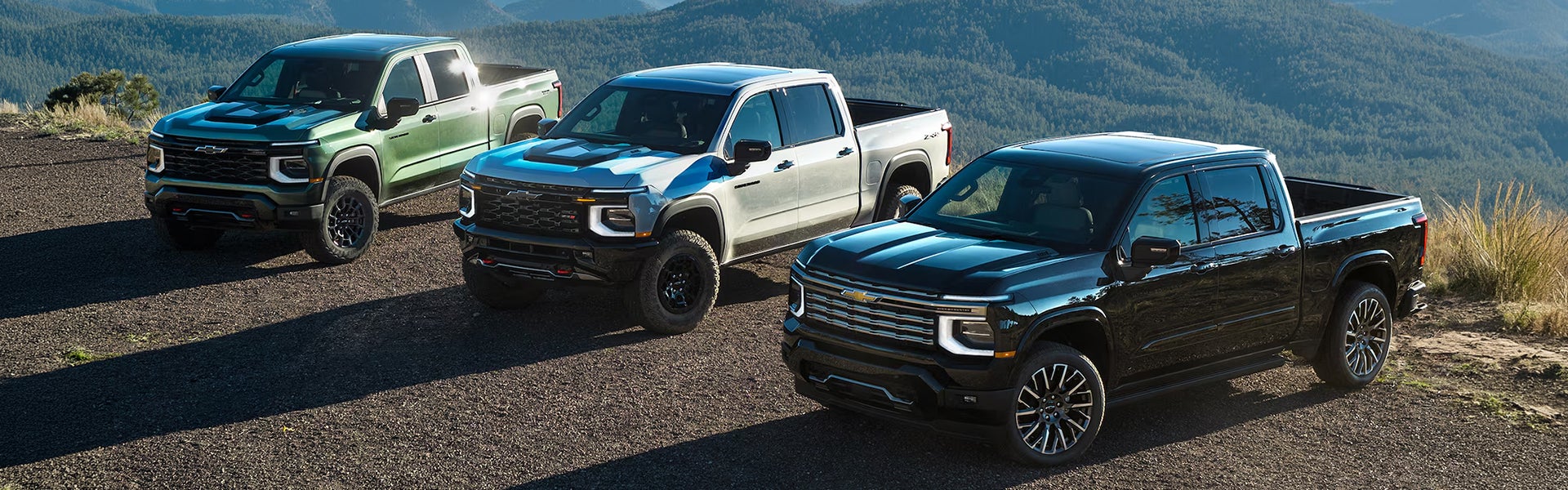
2026 Chevrolet Silverado 1500 parked before a test drive at Allen Tillery Chevrolet

Silverado 1500 · Buying Local

Most truck test drives are too short and too flat to tell you anything. Fifteen minutes around a parking lot and a straight stretch of four-lane will confirm that the truck runs, and almost nothing else. We're lucky here: within about twenty minutes of the lot on Central Avenue you can put a Silverado 1500 through a steep climb, a tight downtown crawl, a set of real curves, and a highway merge. That's a drive that actually answers questions.

Below is the route our salespeople use, what to pay attention to at each stage, and the handful of things worth deciding before you show up so you spend your time driving instead of narrowing things down in the lot. If you want the full picture on the truck itself first, our complete 2026 Silverado 1500 guide collects everything in one place.

Decide two things before you arrive

You'll get far more out of an hour here if you walk in with two answers ready: which cab and bed you want, and which engine you're curious about. Everything else can be sorted in person.

Cab and bed is the one that's hard to undo. A Crew Cab with the short bed is the easy default and it's what most families end up in, but if you're regularly hauling sheet goods or long lumber, the longer bed changes the truck's usefulness more than any option package will. Cargo space runs up to 89.1 cubic feet with the 8-foot bed, and that's a number you feel every weekend rather than once a year. Our specs and dimensions breakdown has the bed and cab measurements side by side if you want to check them against your garage or your trailer before you come.

Engine is the fun one, and it changes the drive more than anything else on the list. There are four: the 2.7L TurboMax four-cylinder (310 hp, 430 lb-ft), the 5.3L V8 (355 hp), the 6.2L V8 (420 hp), and the 3.0L Duramax turbo-diesel (305 hp, 495 lb-ft). They feel like four different trucks, especially on a climb. Pick one to drive and, if you're torn, ask for a second — that's a normal request and we'd rather you be sure. The trim-by-trim comparison shows which engines pair with which trims across the nine-trim lineup, from the work-focused WT up through the off-road ZR2.

Worth knowing on price so nothing surprises you: the lineup starts at $36,900 and runs to $71,800, MSRP excluding the $2,795 destination charge. If you'd like to see what that looks like as a monthly figure before you drive, the payment calculator takes about a minute.

The route, stop by stop

The whole loop runs about twenty minutes of driving. You can shorten it or stretch it, and if you'd rather drive somewhere specific (your jobsite, your boat ramp, the hill you actually live on), just say so. That's usually a better test than anything we'd pick.

1. Central Avenue, first five minutes. Straight out of the lot into stop-and-go. This is the least exciting part of the drive and it's where a lot of trucks quietly annoy you: how the brakes take up, how much of the hood you can see over, whether the truck creeps smoothly in traffic, how big it feels between the lines. Tourist season makes this stretch an honest test of low-speed manners.

2. The climb up West Mountain. Two minutes later you're on a real grade with switchbacks and a low speed limit. Nothing on flat ground tells you what an engine feels like under load, and this does. It's where the difference between the four engines stops being a number on the page and becomes something you can feel in your back. Coming down is just as useful: pay attention to how the truck holds its speed and how the transmission handles the descent without you riding the brake.

3. North on Highway 7. Curves, elevation changes, and enough room to let the truck settle at speed. This is where ride quality separates the trims: how the suspension handles mid-corner bumps, how much road noise reaches you, whether the seat still feels right twenty minutes in. If your commute involves mountain two-lane, this stretch is a fair preview of it.

4. Highway 70 and the merge back. A proper on-ramp and some open four-lane. Merge hard on purpose. If you're looking at a High Country, this is also where you'd want to try Super Cruise, the hands-free driving system available on the High Country, on a compatible stretch. It's a feature that's difficult to appreciate from a description and obvious after five minutes of using it.

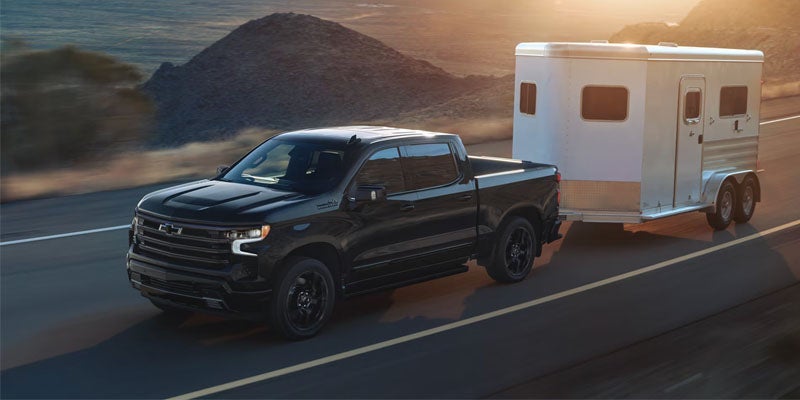
5. Optional: bring your trailer. If towing is the reason you're buying, tow on the drive. Hook up your own trailer, run the same loop, and you'll learn more in twenty minutes than in an afternoon of reading. Call ahead so we can have the right truck hitched and ready. Properly equipped with the Duramax diesel, the Silverado 1500 tows up to 13,300 pounds (Double Cab, standard bed, 2WD, conventional hitch), and our towing capacity guide lays out the ratings by engine and configuration so you can confirm your setup before you arrive. Boat owners: the ramp backing test is worth doing here, with the camera views on.

What to feel for

Once you're moving, the drive goes quickly and it's easy to get to the end without having checked the things that matter daily. A short list worth running through:

  • Seating position first, before you leave the lot. Set the seat, wheel, and mirrors like you own it. A truck that can't quite get comfortable in five minutes won't get better in five years.
  • Getting in and out. Do it a few times, from both sides, the way you actually will. Step height and grab-handle placement matter more than almost any figure you could look up.
  • The bed, at your height. Reach into it. Drop the tailgate. If you'll be loading alone, that's the test.
  • Rear seat, with your people in it. Bring them along. Car seats especially: install one if you can.
  • Phone and screen. Pair your phone on the drive, not after. Run your actual navigation and music setup for a few minutes.
  • Parking it. Back into a normal space downtown. The camera views make this easy, and it's worth knowing which view you'll come to rely on.

If questions come up mid-drive that we can't answer on the spot, the Silverado 1500 FAQ page covers most of the common ones, and we'll happily chase down anything it doesn't.

If you're driving other trucks too

Plenty of people shopping a half-ton drive two or three before deciding, and that's a smart way to buy. One suggestion: drive them the same day, on the same roads, in the same order. Impressions fade fast, and a truck driven on Tuesday on flat ground will always compare oddly to one driven Saturday on a hill.

If the F-150 or the Ram 1500 are on your list, we've put together honest head-to-head breakdowns covering where each truck is strongest: Silverado 1500 vs. Ford F-150 and Silverado 1500 vs. Ram 1500. Cross-shopping Toyota? The Silverado 1500 vs. Tundra comparison covers that matchup, including how the available diesel factors into the decision.

And if partway through the drive you find yourself thinking your trailer might be more than a half-ton should handle, say so — that's a good problem to catch before you buy, not after. Our Silverado 1500 vs. 2500HD comparison walks through where the heavy-duty truck becomes the better answer, and we sell both, so we've got no reason to steer you either direction but the right one.

After the drive

There's no obligation to decide the same day, and we won't push you to. If you liked it, the next steps are simple: check what's on the ground in the configuration you drove, and get the financing question settled so the number is real instead of hypothetical. You can apply for financing in a few minutes, or talk it through with our finance team, including how a trade-in changes things.

If the exact truck you want isn't on the lot, that's usually solvable. The 2026 Silverado 1500 overview shows the current lineup and what we have available, and we can locate or order a specific configuration.

Worth thinking about before you sign, too: what the truck asks of you over the years you'll own it. Our maintenance and ownership guide lays out the service intervals, and the same service department that preps your truck is the one that'll take care of it afterward.

Questions we get

How long does a Silverado 1500 test drive take?

Plan on about an hour at the store, with roughly twenty minutes of that behind the wheel. The route above covers town traffic, a real grade, curves, and a highway merge in that window. If you want longer or want to drive a second truck, there's no problem with that.

Do I need an appointment?

You're welcome to walk in, but calling ahead means the truck you want is charged, fueled, cleaned, and out front instead of being located while you wait. It matters most if you want a specific engine or trim, or if you're bringing a trailer.

Can I test drive with my own trailer hooked up?

Yes, and we'd encourage it if towing is your main reason for buying. Call ahead so we can have a properly equipped truck ready with the right hitch setup, and bring your trailer's weight information so we can confirm the configuration is a correct match.

Can I drive more than one trim or engine in a single visit?

Absolutely, and it's the fastest way to settle a decision between two engines. Driving them back to back on the same roads is far more telling than driving them a week apart.

Which drive should you ask for?

A quick router, from what people usually tell us they need:

  • Mostly commuting and family duty, occasional hauling: drive a Crew Cab with the 2.7L TurboMax. Its low-end torque surprises people on the West Mountain climb, and it's the efficiency-minded pick.
  • Weekend boat or camper towing: drive a V8, and tow with it if you can. Bring your trailer weight and we'll match the configuration.
  • Heavy or frequent towing, long highway miles: ask for the Duramax diesel. The torque delivery on a grade is the whole argument, and it's hard to appreciate any other way.
  • Long highway commutes, comfort first: drive a High Country and try Super Cruise on the Highway 70 stretch.
  • Trails, gravel, and hunting camp access: ask for a Trail Boss or ZR2 and pay attention to ride quality on pavement, since that's where most of your miles will still happen.

Come Drive One

Book your Silverado 1500 test drive

Tell us which engine you'd like to try and roughly when you're coming, and we'll have it ready out front. Bringing a trailer or a car seat to fit? Mention it and we'll plan around it.
Posted in:

Related Posts

Lower front fascia, skid plate and red tow hooks on a 2026 Chevrolet Tahoe.

2026 Chevy Tahoe Towing Capacity With the Family Aboard

The 2026 Chevy Tahoe can tow 8,400 pounds with the 5.3-liter V8, two-wheel drive and Max Trailering Package. Passengers, bags, hitch hardware and the trailer’s tongue weight all count against the Tahoe’s payload. A loaded 5,500-pound camper headed from Hot Springs to Lake Hamilton puts 660 pounds on the hitch at 12 percent tongue weight. By Allen Tillery Auto Chevrolet Key Numbers A 5.3-liter Tahoe with four-wheel drive and Max Trailering can tow up to 8,200 pounds. A family load of 700 pounds, 200 pounds of bags, 80 pounds of hitch equipment and 660 pounds at the ball totals 1,640 pounds. A 1,500-pound payload limit falls 140 pounds short of that family-and-trailer load. The Tahoe’s weight-carrying hitch limit is 5,000 pounds of trailer weight and 600 pounds of tongue weight. Which 2026 Tahoe can tow 8,400 pounds? Chevrolet gives the 8,400-pound rating to the 5.3-liter V8 Tahoe with two-wheel drive (2WD) and Max Trailering Package. With four-wheel drive (4WD), that engine and package reach 8,200 pounds. Without the package, the same engine is rated to tow 7,900 pounds in 2WD or 7,700 in 4WD. Those differences matter for a Hot Springs household choosing a Tahoe to pull a heavier camper from Benton on Highway 70. Tahoe package and combined weight The 8,400-pound version has a 14,500-pound combined rating. That covers the Tahoe and the loaded trailer on the scale together. The 2026 Chevy Tahoe inventory is the same model year as the ratings here, and the specific door label gives the limits for that Tahoe’s equipment. How do passengers and luggage use Tahoe payload? A 700-pound group, 200 pounds of bags and an 80-pound hitch put 980 pounds on a Tahoe before the trailer is attached. Add 660 pounds at the ball and the load climbs to 1,640 pounds. A Tahoe labeled for 1,500 pounds would be 140 pounds over before adding a cooler. A 1,650-pound label would leave just 10 pounds, with the axle and combined limits still to satisfy. Tahoe payload with the third row occupied A third-row passenger’s weight counts the same way as a front passenger’s weight. A Saturday trip to Lake Hamilton with family aboard can fill the Tahoe’s carrying allowance sooner than a weekday boat move from Malvern with only the driver. The open seats do not represent free capacity. A dealer can use the label on a Tahoe from new Chevrolet inventory to check room for the group and hitch load. How much tongue weight does a 5,500-pound camper add? At 12 percent, a 5,500-pound camper adds 660 pounds at the ball. The guide’s 10 to 15 percent conventional range would span 550 to 825 pounds on a trailer that size. Weigh the hitch after loading the trailer because shifting gear changes the load on the ball. The water, equipment and other gear packed for a weekend at Lake Catherine add to the camper’s loaded weight beyond the unloaded figure. Tahoe tongue weight with a loaded boat The boat trailer’s maker may specify a different tongue percentage from a travel trailer. The boat, motor, fuel, trailer and cooler all belong in the loaded tow weight. A hitch inspection with Chevrolet Certified Service can uncover a lower receiver limit before a trip to the ramp. When does the Tahoe need a weight-distributing hitch? Chevrolet’s Tahoe guide calls for a weight-distributing hitch and sway control above 600 pounds of tongue weight. The weight-carrying hitch limit has two numbers, 5,000 pounds behind the Tahoe and 600 pounds pressing down at the ball. A 5,500-pound trailer at 660 pounds crosses both, even though the trailer is far below 8,400 pounds. Tahoe hitch capacity before a Highway 270 trip Hitch equipment needs to be rated for the loaded trailer and compatible with its manufacturer’s setup. A weight-distributing hitch changes how the load is shared between axles. It does not add payload to the Tahoe. A Chevrolet Tahoe test drive gives a buyer time to match the vehicle and package to those limits before using it on the grades along Highway 270. What catches an overloaded Tahoe at the scale? A loaded Tahoe weighing 7,000 pounds under a 14,500-pound combined rating has up to 7,500 pounds left under that combined limit. The vehicle’s trailer rating, rear axle rating and loaded vehicle limit still apply. This is where a Tahoe can be under its gross combined rating and over its rear axle rating after a family loads gear and attaches the trailer. Tahoe rear axle weight at the ramp A trailer’s tongue presses behind the rear axle, and the hitch increases the load the rear axle bears. The trailer’s loaded weight and the axle readings are useful together when a Hot Springs family tows a boat often. A change in trailer loading can change the hitch weight on the next Lake Hamilton trip. Tahoe trailering help in Hot Springs Allen Tillery Auto Chevrolet can pair the towing equipment on a specific Tahoe with the weight figures on its label. The Allen Tillery Chevrolet contact page lists (501) 881-4274. Use the Chevrolet finance center after you find a Tahoe with the trailering equipment you need. 2026 Chevy Tahoe towing FAQs Can a 2026 Tahoe tow 8,400 pounds with four-wheel drive? The top 8,400-pound rating belongs to the 5.3-liter two-wheel-drive Tahoe with Max Trailering. Chevrolet rates the 5.3-liter four-wheel-drive Tahoe with the package for 8,200 pounds, before applying the specific vehicle’s load and equipment limits. Does an empty trailer weight count? A Tahoe pulls the trailer as it sits on the road. That includes water, fuel, camping equipment or the boat and its gear. A 5,500-pound loaded camper can therefore have a higher hitch load than the empty figure in its brochure. Does luggage in the third row count against payload? Luggage and passengers share the Tahoe’s carrying allowance with the hitch equipment and the tongue load. Two hundred pounds of bags lowers the room for those other items by 200 pounds, whether the third row is folded or in use. Does a Max Trailering Tahoe always carry more people and gear? The tow rating comes from a particular powertrain and package. The payload label is for the SUV as equipped. A Tahoe with a higher trailer rating can still run out of allowable vehicle load first when the whole family rides along. What does the combined rating count? It counts the Tahoe, its occupants and cargo, and the loaded trailer together. A 14,500-pound combined limit and a 7,000-pound loaded Tahoe leave 7,500 pounds under that one number, before the Tahoe, trailer, axle and hitch ratings are applied.

Exterior view of a 2026 Chevrolet Silverado 1500

2026 Silverado 1500 Camper Tongue Weight

The 2026 Chevrolet Silverado 1500 can tow up to 13,300 pounds, and a 22- to 24-foot travel trailer weighing 5,000 to 7,000 pounds loaded is a useful size to shop for if your truck can carry the hitch weight and passengers. A 7,000-pound camper typically puts about 700 to 1,050 pounds down on the hitch. Chevrolet reaches the 13,300-pound maximum with a two-wheel-drive Double Cab, standard bed, 3.0-liter Duramax diesel, Max Trailering Package and 20-inch wheels. By Allen Tillery Auto Chevrolet Key Numbers A 13,300-pound rating requires the right Duramax Double Cab, with Max Trailering and 20-inch wheels. For the 5,000-pound example, set aside 500 to 750 pounds of carrying capacity for the tongue. At the upper end of the normal hitch-weight range, a 7,000-pound camper can put 1,050 pounds on the ball. Start with 1,500 pounds of carrying capacity and subtract 1,050 at the hitch. That leaves 450 for everyone in the cab, the hardware and gear. How much tongue weight does a 5,000- to 7,000-pound camper put on the truck? Expect roughly 500 to 750 pounds on the ball from a 5,000-pound camper and 700 to 1,050 from a 7,000-pound camper. That comes from Chevrolet’s 10% to 15% guideline for conventional trailers. The trailer maker may specify a target, and the truck and hitch each have a rated limit. For a family towing from Benton or Bryant on Interstate 30, every pound on the hitch uses some of the same carrying allowance as people, hitch hardware and anything in the bed. The 2026 Silverado specifications show the cab and bed choices. The tire and loading sticker on the driver’s door gives the allowance for the specific truck. How does a 7,000-pound camper use up payload? A 1,500-pound carrying allowance leaves just 450 pounds after a camper puts 1,050 pounds on the hitch. If the people in the cab weigh 400 pounds altogether, only 50 pounds remain for hitch hardware and everything in the bed. That is how a truck can run out of room to carry weight before it reaches its trailer rating. Moving gear inside the camper can change how hard it presses on the truck. Before a trip toward Malvern or Arkadelphia, a tongue scale can give you the load on the ball and a truck scale can show what each axle carries. Those readings matter when passengers and gear leave only a small margin on the door sticker. Which Silverado 1500 gets the highest tow rating? Look for the two-wheel-drive Duramax Double Cab with the standard bed, Max Trailering and 20-inch wheels for Chevrolet’s top rating. The 2026 Chevrolet Trailering Guide breaks the ratings down by engine, cab, bed and drive type. A Crew Cab may give the family more room and carry a different tow rating. The Silverado 1500 inventory identifies each truck by cab and equipment. Traffic backing up on Highway 70 into Hot Springs can put the truck and trailer brakes to work together. The owner’s manual lists the conventional hitch limits and trailer-brake equipment. The Silverado maintenance schedule includes brake and tire inspections that Chevrolet service can do before a towing season. What does a 22- to 24-foot camper actually weigh? A 22-foot 4-inch Rockwood lists 4,493 pounds unloaded and room for 1,344 pounds of cargo, or 5,837 pounds together. One 23-foot 10-inch layout lists 5,132 pounds unloaded and room for 1,662 pounds of cargo, or 6,794 pounds together. Both are in the loaded range above, and both can weigh several hundred pounds more on the road than they do on the lot. Fully loaded, the 5,837-pound and 6,794-pound Rockwoods both land in the 5,000- to 7,000-pound range. The label on the camper gives its maximum loaded weight. The combined passenger, bed and hitch load still has to fit the Silverado’s carrying limit. Should I use the camper’s dry weight or its weight packed for a trip? Use the weight of the camper with water, batteries, propane and gear on board. The truck also carries the weight on the ball, the hitch hardware and everyone in the cab. The Silverado towing page gives model ratings, and the trailering label gives the limit for that particular cab, engine and equipment. A 22- to 24-foot floor plan can give a family the space it wants and fit a campsite at Lake Hamilton. Campers of that length can weigh very different amounts once packed. The weight on the lot is a starting figure, and the trailer’s loaded weight is the one to use for the trip. Silverado camper towing FAQs Where do I find the rating for my particular Silverado? The trailering label on the truck gives the limits for its cab, engine, drivetrain and equipment. A different cab or drive type can have a different rating even with the same Duramax engine. Should I use dry camper weight or loaded camper weight? For shopping, the trailer’s maximum loaded weight gives you a figure to plan around. Once you own it, a scale reading with your water, propane, batteries and trip gear gives you the weight for that drive. Can a hitch that spreads out the weight raise my tow rating? A weight-distributing hitch shifts some load among the truck and trailer axles. The truck's weight limits still apply, and the hitch has its own rating. Is a 7,000-pound trailer always 700 pounds on the hitch? It is about 700 pounds at the low end of Chevrolet’s conventional-trailer guideline and can be 350 pounds higher at the upper end. The actual reading can move when you shift gear inside the camper. Is the towing rating the only limit that matters? The truck has a trailer limit, a carrying limit and axle limits. The hitch also has limits. A truck can be within its trailer rating and still carry too much weight on the rear axle. Contact Allen Tillery Chevrolet in Hot Springs with the camper's loaded weight and the number of people who will ride in the truck. The showroom hours are listed for your trip from Benton or Malvern.

2027 Chevrolet Silverado 1500 pickup truck

2027 Silverado 1500 for Hot Springs Work Crews

The 2027 Silverado 1500 Work Truck starts at $41,395 with destination in Hot Springs. A two-wheel-drive Regular Cab with the Standard Bed has 79.68 inches of floor length, enough for a six-foot ladder with the tailgate up. With the 2.7L TurboMax, that setup can carry up to 2,340 pounds of payload. Quick Answer Chevrolet’s $38,600 base price plus $2,795 in destination freight comes to $41,395. The Regular Cab Standard Bed has 50.62 inches between the wheel wells, enough room for a four-foot sheet laid flat. A TurboMax Regular Cab Long Bed 2WD can tow up to 9,400 lbs when properly equipped. Chevrolet calls for a tire rotation and multi-point inspection every 7,500 miles. What does the Work Truck price include? The $41,395 factory starting price includes the $2,795 freight charge and the standard 350-hp TurboMax. It also includes the 10-speed automatic and LED headlights and taillights. The Work Truck gets the same 16.3-inch center touchscreen and 12.2-inch driver display that Chevy fits across all seven trims. The Work Truck’s $38,600 MSRP is Chevrolet’s base figure before freight. The TurboMax makes 455 lb-ft at 3,000 rpm. Chevrolet revised the turbocharger and pistons for the 2027 engine and paired it with the same 10-speed transmission used across the Silverado lineup. Will a four-by-eight sheet fit in the bed? A four-by-eight sheet fits between the wheel wells of the 2WD Regular Cab Standard Bed, with the end extending past the closed tailgate. There are 50.62 inches between the wells and 79.68 inches from the front of the box to the closed tailgate. The Silverado bed dimensions put the box at 71.7 cubic feet and 22.44 inches deep, with 71.41 inches of width at its widest point. A 2WD Regular Cab with the Standard Bed measures 212.12 inches from bumper to bumper. Its 40.7-foot turning circle is useful for a truck that makes repeated stops along Highway 70 in Hot Springs. A 2WD Double Cab with the Standard Bed keeps the same 79.68 inches of bed floor and adds a rear bench. How much can it carry and tow? Chevrolet rates the TurboMax Regular Cab Standard Bed 2WD for up to 2,340 pounds of payload. The TurboMax Regular Cab Long Bed 2WD reaches 9,400 lbs of conventional towing when properly equipped. For a crew hauling a utility trailer toward Benton, the Silverado towing chart puts a TurboMax Double Cab 2WD at up to 9,100 lbs. The 2027 towing supplement puts the tongue load on a conventional trailer at 10 to 15 percent of loaded trailer weight in typical use. That uses part of the truck’s payload along with the crew and the tools in the bed. Which cab seats the crew? The 2WD Regular Cab Standard Bed has three seats with its front bench. The 2WD Double Cab Standard Bed and 2WD Crew Cab Short Bed seat up to six with a front bench. Chevy gives the Double Cab 34.75 inches of rear legroom. The Crew Cab has 42.80 inches in the rear, which leaves more room for adults on a run from Malvern or Arkadelphia. All four engines in the 2027 Silverado lineup come with a 10-speed automatic. The 2WD Crew Cab Short Bed has 70.15 inches of inside bed length and 62.8 cubic feet of cargo room. A six-foot ladder is longer than that bed floor with the tailgate up. What service comes up first? The first scheduled tire rotation and multi-point inspection come at 7,500 miles. The 2.7L TurboMax uses 6.0 quarts of dexos1 SAE 0W-30 with an oil filter. Chevrolet calls for an oil and filter change within 600 miles of the message and at least every 12 months. The Silverado maintenance schedule includes the 60,000-mile spark plug interval for the TurboMax and the 22,500-mile or 24-month cabin filter interval. Chevrolet covers the first oil and filter change, a four-tire rotation and a multi-point inspection at a participating dealer during the first year. Chevrolet’s bumper-to-bumper limited warranty covers defects in materials or workmanship for three years or 36,000 miles, whichever comes first. The 22,500-mile cabin filter falls on the third 7,500-mile rotation if the truck reaches that mileage before the two-year filter deadline. A Work Truck used year-round can reach the annual oil deadline on a different visit from its mileage-based tire rotation. Chevrolet calls for a new oil filter at each oil change and brake fluid replacement every five years. Shopping for a Work Truck in Hot Springs Allen Tillery Chevrolet is at 4573 Central Ave in Hot Springs. Buyers from Bryant, Benton and Malvern can view the 2027 Silverado inventory search or call (501) 881-4274 about a Work Truck. Chevrolet lists late-2026 availability for the redesigned Silverado. Owners can schedule Certified Service at the same address. The factory starting price includes freight. Taxes, fees and optional equipment can change the total. 2027 Silverado 1500 Work Truck FAQs How much is a base Work Truck before freight? The factory price is $38,600 before freight. Chevrolet’s $2,795 freight charge puts the starting figure at $41,395. The base Work Truck gets the 350-hp TurboMax with a 10-speed automatic and the 16.3-inch center touchscreen. How much does a 2WD TurboMax Regular Cab weigh empty? Chevrolet gives a base curb weight of 4,560 pounds for the TurboMax 2WD Regular Cab Standard Bed. The same setup has a 6,900-pound gross vehicle weight rating and a maximum payload of 2,340 pounds. How much can a 4WD TurboMax Double Cab tow? The TurboMax Double Cab 4WD can tow up to 8,900 lbs when properly equipped. Chevrolet’s engineering figures give the same 8,900-lb maximum for the 4WD TurboMax Crew Cab. When are TurboMax spark plugs due? Chevrolet schedules TurboMax spark plug replacement at 60,000 miles. The same owner’s manual schedules brake fluid every five years and coolant at 150,000 miles or six years, whichever comes first. What can I see on the Work Truck’s dash? The Work Truck has a standard 16.3-inch center touchscreen and 12.2-inch driver display. Chevrolet also includes an HD Rear Vision Camera and front and rear park assist on the 2027 lineup, useful when backing into a loading bay.

Contact Us

Fill out this form below and we'll contact you shortly
*Required Fields