


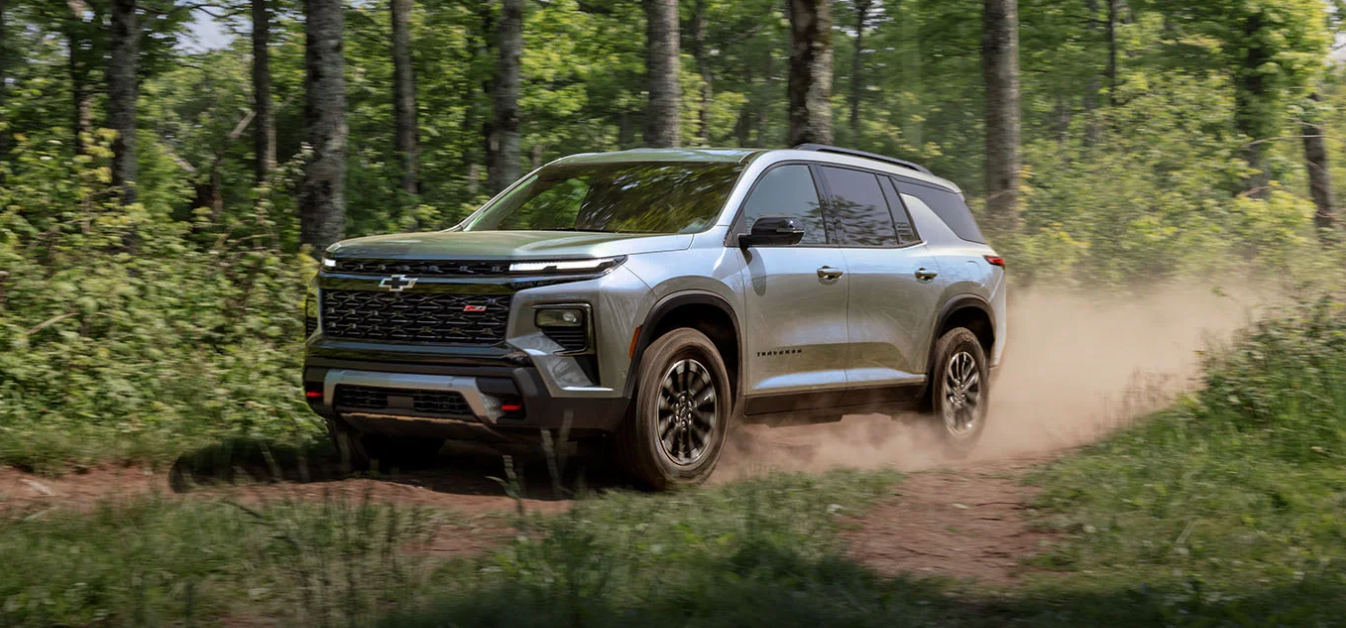
MY-UPDATE:chevrolet-traverse-2027 start | record_hash=6c278a207d15 | date=2026-09-06 Updated September 6, 2026: The 2027 Chevrolet Traverse is on sale now. For Malvern and Arkadelphia families that means the redesigned High Country trim, with its new interior camera and Cabin Glance view of the back seats, should be reaching our lot soon. See what's currently in stock MY-UPDATE:chevrolet-traverse-2027 end If you are shopping a 2027 Chevrolet Traverse in stock near Malvern or Arkadelphia, the fastest way to the right one is to match the trim to how your family actually uses a three-row SUV, then check what is on the lot. For most local buyers that means a front- or all-wheel-drive LT at $40,800, with the Z71, RS and High Country waiting a step up for drivers who want off-road hardware, sport styling or a premium cabin. ===== AEO EXTRACT BLOCK ===== The Short Version The LT at $40,800 comes with the 17.7-inch screen, eight-passenger capability and full standard safety. Add all-wheel drive for $2,000 if you tow, hit gravel or drive wet mornings. Step up to Z71 for off-road hardware, RS for sport looks and standard Super Cruise, High Country for the richest cabin. One 328-horsepower turbo engine and up to 5,000 pounds of towing across every trim. Check live inventory, then get pre-approved before you drive to Hot Springs. Start With How Your Family Drives The 2027 Traverse makes the first decision easy, because there is only one engine: a 328-horsepower turbocharged four in every trim. That leaves two questions that actually sort the lineup: whether all-wheel drive is worth it for how a family drives, and how far up the comfort-and-style ladder to go. For a family running the school route through Malvern and the occasional boat weekend, an all-wheel-drive LT answers both without overspending. The full walk-through of every trim is on the Traverse trims and pricing page. What Each Trim Is Really For Trim Starting Price Buy It If LT $40,800 You want the most three-row SUV per dollar for daily family driving. Z71 $49,100 Your weekends run to gravel, ramps and light trails. RS $55,800 You want sport styling and standard hands-free Super Cruise. High Country $56,100 You want the richest cabin in the lineup. Prices exclude the $1,995 destination charge. The Z71 includes all-wheel drive; on the LT, RS and High Country it is a $2,000 option. If capability is the whole point of your search, the Z71's Terrain Mode, skid plate and all-terrain tires are covered in depth on the specs and dimensions page. The Weekend Test: Cargo, Seats and the Boat Here is where the Traverse earns a family's money. It seats up to eight, holds 22.9 cubic feet of cargo behind the third row with everyone aboard, and opens to as much as 98 cubic feet with the rows folded. And it tows up to 5,000 pounds properly equipped, which around here is the difference between keeping the boat at home and keeping it in a rental slip. For a Saturday at Lake Hamilton, that means the whole family, the cooler and the boat make the trip in one vehicle. The everyday numbers behind that are on the Traverse overview. Why Malvern and Arkadelphia Families Shop Here Allen Tillery Auto Chevrolet has sold and serviced Chevrolets from 4573 Central Ave in Hot Springs since 1967, an easy drive up US-270 from Malvern or over from Arkadelphia. Buying close to home matters most after the sale, because the same service department that preps your Traverse handles the covered first oil change and every visit after it. Ownership costs, intervals and warranty terms are laid out on the maintenance and service page, and quick answers to the common questions are gathered on the Traverse FAQ page, and the full Traverse research hub pulls every page together in one place. Ready to Shop the Lot? The best next step is to see which trims and colors are actually in stock, then lock a payment before you make the drive. See the 2027 Traverse inventory, get pre-approved online, run the numbers on the payment calculator, or call the team at 501-881-4274 to set up a test drive. Bring the whole family; the third row is the part they will want to try. Written by the Allen Tillery Auto Chevrolet team, Hot Springs, AR. We have sold and serviced Chevrolets from 4573 Central Ave since 1967. 2027 Traverse Buyer Questions What is the best 2027 Traverse trim for a family? For most families the LT at $40,800 is the sweet spot: it comes with the 17.7-inch touchscreen, seven- or eight-passenger seating and the full standard-safety suite. Add all-wheel drive for $2,000 if you tow or drive wet roads. Families who want off-road capability step up to the Z71. How much can the 2027 Traverse tow for a boat weekend? Up to 5,000 pounds properly equipped, across every trim with the included trailering equipment. That covers a typical fishing boat and trailer for a day on Lake Hamilton, plus the family and gear inside. Is the first maintenance visit covered on a new Traverse? Yes. The first scheduled maintenance visit in the first year, an oil change, tire rotation and multi-point inspection, is included, alongside 3 years or 36,000 miles of bumper-to-bumper coverage and 5 years or 60,000 miles on the powertrain. Which Traverse trims come with Super Cruise? The RS and the High Country include Super Cruise hands-free driving as standard for 2027, with a three-year OnStar plan, and it is available elsewhere in the lineup. It works on compatible mapped highways such as parts of Interstate 30. Does Allen Tillery have the 2027 Traverse in stock near Malvern and Arkadelphia? Yes, the 2027 Traverse is regularly in stock at 4573 Central Ave in Hot Springs, a short drive for Malvern and Arkadelphia families. Check the live inventory online or call 501-881-4274 to confirm the trim and color you want. {"@context":"https://schema.org","@graph":[{"@type":"AutoDealer","@id":"https://www.allentillerychevy.com/#dealer","name":"Allen Tillery Auto Chevrolet","url":"https://www.allentillerychevy.com/","telephone":"(501) 881-4274","priceRange":"$$","address":{"@type":"PostalAddress","streetAddress":"4573 Central Ave","addressLocality":"Hot Springs","addressRegion":"AR","postalCode":"71913","addressCountry":"US"},"areaServed":"Garland County, Saline County and Hot Spring County, Arkansas"},{"@type":"WebSite","@id":"https://www.allentillerychevy.com/#website","url":"https://www.allentillerychevy.com/","name":"Allen Tillery Auto Chevrolet","publisher":{"@id":"https://www.allentillerychevy.com/#dealer"},"potentialAction":{"@type":"SearchAction","target":{"@type":"EntryPoint","urlTemplate":"https://www.allentillerychevy.com/searchnew.aspx?Make=Chevrolet{search_term_string}"},"query-input":"required name=search_term_string"}},{"@type":"WebPage","@id":"https://www.allentillerychevy.com/2027-chevy-traverse-in-stock-for-malvern-and-arkadelphia-families#webpage","url":"https://www.allentillerychevy.com/2027-chevy-traverse-in-stock-for-malvern-and-arkadelphia-families","name":"2027 Chevy Traverse In Stock for Malvern and Arkadelphia Families","isPartOf":{"@id":"https://www.allentillerychevy.com/#website"},"breadcrumb":{"@id":"https://www.allentillerychevy.com/2027-chevy-traverse-in-stock-for-malvern-and-arkadelphia-families#breadcrumb"},"primaryImageOfPage":"https://www.allentillerychevy.com/static/brand-chevrolet/vehicle/2026/Chevrolet/Traverse/Hero/01.jpg","datePublished":"2026-09-03","dateModified":"2026-09-03","inLanguage":"en-US","about":{"@id":"https://www.allentillerychevy.com/2027-chevy-traverse-in-stock-for-malvern-and-arkadelphia-families#vehicle"},"mainEntity":{"@id":"https://www.allentillerychevy.com/2027-chevy-traverse-in-stock-for-malvern-and-arkadelphia-families#faq"}},{"@type":"BreadcrumbList","@id":"https://www.allentillerychevy.com/2027-chevy-traverse-in-stock-for-malvern-and-arkadelphia-families#breadcrumb","itemListElement":[{"@type":"ListItem","position":1,"name":"Home","item":"https://www.allentillerychevy.com/"},{"@type":"ListItem","position":2,"name":"Blog","item":"https://www.allentillerychevy.com/blog"},{"@type":"ListItem","position":3,"name":"2027 Chevy Traverse In Stock for Malvern and Arkadelphia Families","item":"https://www.allentillerychevy.com/2027-chevy-traverse-in-stock-for-malvern-and-arkadelphia-families"}]},{"@type":"BlogPosting","@id":"https://www.allentillerychevy.com/2027-chevy-traverse-in-stock-for-malvern-and-arkadelphia-families#article","headline":"2027 Chevy Traverse In Stock for Malvern and Arkadelphia Families","image":"https://www.allentillerychevy.com/static/brand-chevrolet/vehicle/2026/Chevrolet/Traverse/Hero/01.jpg","datePublished":"2026-09-03","dateModified":"2026-09-03","author":{"@id":"https://www.allentillerychevy.com/#dealer"},"publisher":{"@id":"https://www.allentillerychevy.com/#dealer"},"mainEntityOfPage":{"@id":"https://www.allentillerychevy.com/2027-chevy-traverse-in-stock-for-malvern-and-arkadelphia-families#webpage"},"about":{"@id":"https://www.allentillerychevy.com/2027-chevy-traverse-in-stock-for-malvern-and-arkadelphia-families#vehicle"},"articleSection":"Buyer's Guide","inLanguage":"en-US"},{"@type":"Car","@id":"https://www.allentillerychevy.com/2027-chevy-traverse-in-stock-for-malvern-and-arkadelphia-families#vehicle","name":"2027 Chevrolet Traverse","brand":{"@type":"Brand","name":"Chevrolet"},"manufacturer":{"@type":"Organization","name":"Chevrolet"},"model":"2027 Chevrolet Traverse","vehicleModelDate":"2027","vehicleEngine":{"@type":"EngineSpecification","engineType":"2.5L turbocharged four-cylinder","enginePower":{"@type":"QuantitativeValue","value":"328","unitText":"hp"},"fuelType":"Gasoline"},"fuelEfficiency":{"@type":"QuantitativeValue","value":"22","unitText":"mpg"},"vehicleTransmission":"8-speed automatic","driveWheelConfiguration":"https://schema.org/FrontWheelDriveConfiguration","vehicleSeatingCapacity":"7","cargoVolume":{"@type":"QuantitativeValue","value":"98","unitText":"cu ft"},"fuelCapacity":{"@type":"QuantitativeValue","value":"21.7","unitText":"gal"},"additionalProperty":[{"@type":"PropertyValue","name":"Maximum towing capacity","value":"5000 lb properly equipped"},{"@type":"PropertyValue","name":"Torque","value":"326 lb-ft"}],"offers":{"@type":"AggregateOffer","priceCurrency":"USD","lowPrice":"40800","highPrice":"58100","offerCount":"7","availability":"https://schema.org/InStock","seller":{"@id":"https://www.allentillerychevy.com/#dealer"}}},{"@type":"FAQPage","@id":"https://www.allentillerychevy.com/2027-chevy-traverse-in-stock-for-malvern-and-arkadelphia-families#faq","mainEntity":[{"@type":"Question","name":"What is the best 2027 Traverse trim for a family?","acceptedAnswer":{"@type":"Answer","text":"For most families the LT at $40,800 is the sweet spot: it comes with the 17.7-inch touchscreen, seven- or eight-passenger seating and the full standard-safety suite. Add all-wheel drive for $2,000 if you tow or drive wet roads. Families who want off-road capability step up to the Z71."}},{"@type":"Question","name":"How much can the 2027 Traverse tow for a boat weekend?","acceptedAnswer":{"@type":"Answer","text":"Up to 5,000 pounds properly equipped, across every trim with the included trailering equipment. That covers a typical fishing boat and trailer for a day on Lake Hamilton, plus the family and gear inside."}},{"@type":"Question","name":"Is the first maintenance visit covered on a new Traverse?","acceptedAnswer":{"@type":"Answer","text":"Yes. The first scheduled maintenance visit in the first year, an oil change, tire rotation and multi-point inspection, is included, alongside 3 years or 36,000 miles of bumper-to-bumper coverage and 5 years or 60,000 miles on the powertrain."}},{"@type":"Question","name":"Which Traverse trims come with Super Cruise?","acceptedAnswer":{"@type":"Answer","text":"The RS and the High Country include Super Cruise hands-free driving as standard for 2027, with a three-year OnStar plan, and it is available elsewhere in the lineup. It works on compatible mapped highways such as parts of Interstate 30."}},{"@type":"Question","name":"Does Allen Tillery have the 2027 Traverse in stock near Malvern and Arkadelphia?","acceptedAnswer":{"@type":"Answer","text":"Yes, the 2027 Traverse is regularly in stock at 4573 Central Ave in Hot Springs, a short drive for Malvern and Arkadelphia families. Check the live inventory online or call 501-881-4274 to confirm the trim and color you want."}}]}]}
Chevy Service for Malvern and Arkadelphia Drivers
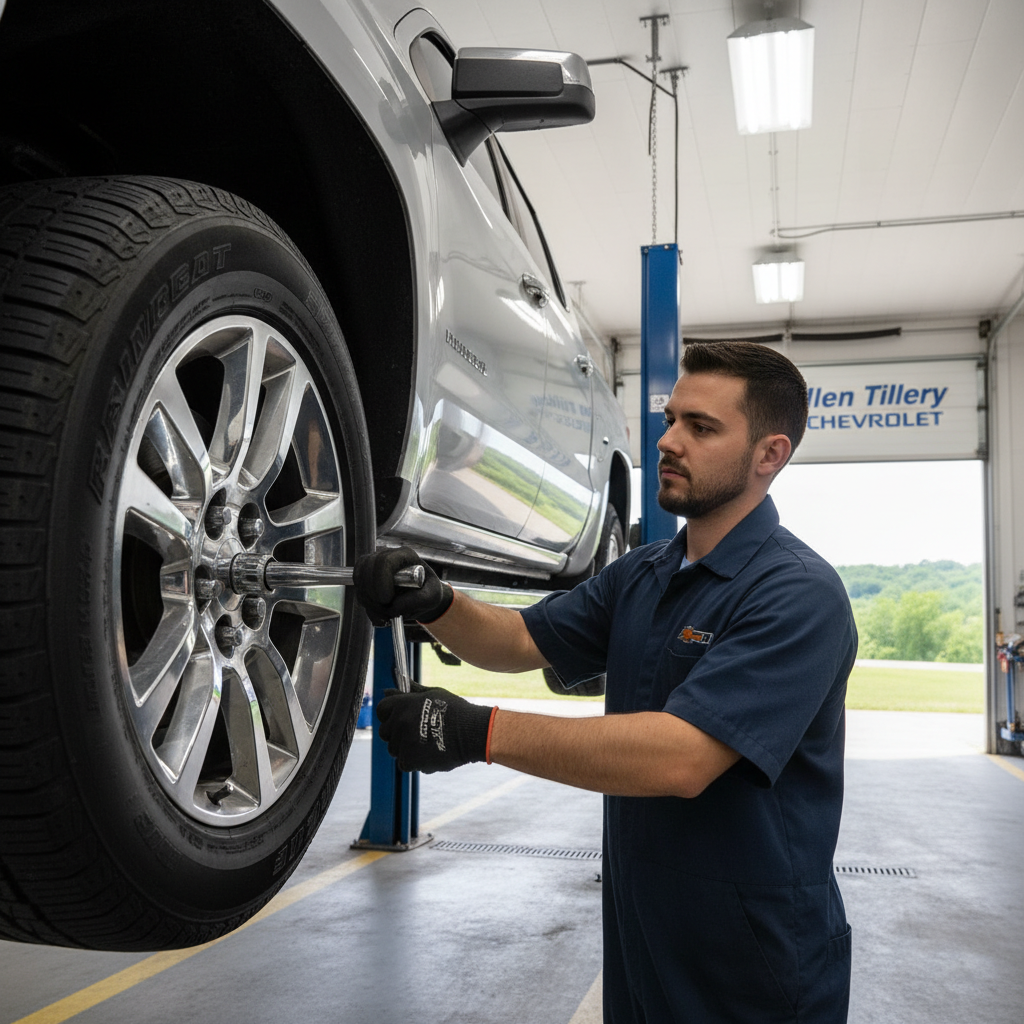
Chevy Service for Malvern and Arkadelphia Drivers Quick answer: Allen Tillery Chevy's Hot Springs service department covers every Chevy system: oil, tires, brakes, battery, collision and body work. GM-trained technicians and genuine parts are what actually protect a warranty claim or a resale appraisal, not a slogan. Simple out-of-warranty work is fine at a trusted independent shop; warranty, recall and electrical work belongs at the dealer. Schedule online any time; the Service & Parts Specials page carries current pricing. If you're weighing where to get your Chevy serviced from Malvern or Arkadelphia, here's the plain version: Allen Tillery Chevy's Hot Springs service department can handle anything from a routine oil change to full collision repair, and we'll tell you honestly which jobs are worth the drive. Drivers from Malvern and Arkadelphia make the trip regularly, and so do customers from Benton and Little Rock who'd rather deal with a shop that knows their Chevy's full history than gamble on a stranger. GM-trained technicians, genuine parts, and a VIN-tied service record are the actual reasons, not just convenience. What the Hot Springs service department covers The service department handles every system on a modern Chevy, from routine maintenance to body shop and collision repair. Scheduling runs through Schedule Service or Serviceappmt, and the general Chevy Service & Repair Hot Springs page covers the full menu. Routine maintenance: oil, tires, brakes and battery Oil changes and fluid questions are covered on Certified Oil Change Service and Oil Maintenance Hot Springs. Tire work spans New Tires, Tire Finder, the Tirefinder tool, plus dedicated pages for rotation, alignment, tire types and tire basics. Brakes are covered on Certified Brake Service and Brake Maintenance Hot Springs, and battery testing runs through Certified Battery Service and Battery Maintenance Hot Springs. The real case for dealer service The honest advantage is documentation. A GM-trained technician working from factory diagnostic software catches details a generic code reader misses, particularly on newer electrical and driver-assist systems. Genuine GM parts are built to the vehicle's original spec, which matters most on anything safety- or emissions-related, and every visit gets logged against your VIN, which is exactly what a warranty claim or a trade-in appraisal needs later. When an independent shop is fine, honestly If your Chevy is out of warranty and needs simple, non-technical work such as an oil change or a basic brake job, a trusted independent shop in Malvern or Arkadelphia can absolutely handle it well. The dealer earns its premium on warranty-covered work, recalls and factory campaigns, complex electrical or drivetrain diagnostics, and collision repair you want documented for resale. What Hot Springs area driving does to a Chevy Summer here routinely puts triple-digit heat index on a loaded transmission and cooling system, which is harder on a vehicle than the mileage alone suggests. The county roads feeding the lakes around Malvern and Arkadelphia are not flat, and a fifth-wheel or gooseneck load puts real weight on the rear axle regardless of terrain. Regular inspections during a standard visit catch that wear early, while it's still the cheap fix. The GM Maintenance Checklist is a useful reference for exactly what a severe-duty schedule covers. Body shop, windshields, EV service and genuine parts Beyond routine work, the Collision Shop and Body Shop handle everything from a parking-lot dent to a full insurance claim, and Windshield Care covers chip repair and replacement. Chevy's EV lineup runs under EV Pre-Paid Maintenance, separate from standard Pre-Paid Maintenance plans. Cabin and engine filters are covered on Cabin & Engine Air Filter Maintenance, and every job runs on genuine parts, explained on Why Genuine GM Parts Matter. Dealer or independent, and how to book Book here for warranty work, a recall, collision repair, or anything electrical or drivetrain-related on a newer model. An independent shop closer to Malvern or Arkadelphia is a reasonable call for simple routine maintenance out of warranty. Drivers from Benton and Little Rock book here for the same reasons. Current specials post on the general service page, and you can get on the calendar in a couple minutes through Serviceappmt. Common questions Do I have to use the dealer to keep my Chevy's warranty valid? No. Federal law doesn't require dealer service to preserve a manufacturer warranty, as long as the work meets the manufacturer's specifications and you keep records. Warranty-covered repairs themselves do need to go through a GM dealer. How often should tires be rotated in this heat? Every vehicle's exact interval is set by the Owner's Manual, but sustained triple-digit heat accelerates tread wear, so the service team checks tire condition at every visit rather than waiting for a scheduled rotation to catch it. Can the body shop work directly with my insurance company? Yes. The collision and body shop teams handle insurance estimates and claims directly, so you're not managing that process alone. Is genuine GM parts really worth it over aftermarket? For anything safety-, emissions- or warranty-related, yes, since genuine parts are built to the vehicle's original spec. For minor cosmetic items it matters less, and the service team can tell you honestly which category your part falls into. Do you service EVs like the Chevy Bolt? Yes. Technicians are trained on Chevy's EV platforms, and EV-specific maintenance plans are available separately from standard gas-engine plans. {"@context":"https://schema.org","@graph":[{"@type":"AutoDealer","@id":"https://www.allentillerychevy.com/#dealer","name":"Allen Tillery Auto Chevrolet","url":"https://www.allentillerychevy.com/","telephone":"(501) 881-4274","priceRange":"$$","address":{"@type":"PostalAddress","streetAddress":"4573 Central Ave","addressLocality":"Hot Springs","addressRegion":"AR","postalCode":"71913","addressCountry":"US"},"areaServed":"Garland County, Saline County and Hot Spring County, Arkansas"},{"@type":"WebSite","@id":"https://www.allentillerychevy.com/#website","url":"https://www.allentillerychevy.com/","name":"Allen Tillery Auto Chevrolet","publisher":{"@id":"https://www.allentillerychevy.com/#dealer"},"potentialAction":{"@type":"SearchAction","target":{"@type":"EntryPoint","urlTemplate":"https://www.allentillerychevy.com/searchnew.aspx?Make=Chevrolet{search_term_string}"},"query-input":"required name=search_term_string"}},{"@type":"WebPage","@id":"https://www.allentillerychevy.com/chevy-service-for-malvern-and-arkadelphia-drivers#webpage","url":"https://www.allentillerychevy.com/chevy-service-for-malvern-and-arkadelphia-drivers","name":"Chevy Service for Malvern and Arkadelphia Drivers","isPartOf":{"@id":"https://www.allentillerychevy.com/#website"},"breadcrumb":{"@id":"https://www.allentillerychevy.com/chevy-service-for-malvern-and-arkadelphia-drivers#breadcrumb"},"primaryImageOfPage":"https://www.allentillerychevy.com/static/brand-chevrolet/vehicle/2026/Chevrolet/Silverado-1500/Hero/01.jpg","datePublished":"2026-09-27","dateModified":"2026-09-27","inLanguage":"en-US","mainEntity":{"@id":"https://www.allentillerychevy.com/chevy-service-for-malvern-and-arkadelphia-drivers#faq"}},{"@type":"BreadcrumbList","@id":"https://www.allentillerychevy.com/chevy-service-for-malvern-and-arkadelphia-drivers#breadcrumb","itemListElement":[{"@type":"ListItem","position":1,"name":"Home","item":"https://www.allentillerychevy.com/"},{"@type":"ListItem","position":2,"name":"Blog","item":"https://www.allentillerychevy.com/blog"},{"@type":"ListItem","position":3,"name":"Chevy Service for Malvern and Arkadelphia Drivers","item":"https://www.allentillerychevy.com/chevy-service-for-malvern-and-arkadelphia-drivers"}]},{"@type":"BlogPosting","@id":"https://www.allentillerychevy.com/chevy-service-for-malvern-and-arkadelphia-drivers#article","headline":"Chevy Service for Malvern and Arkadelphia Drivers","image":"https://www.allentillerychevy.com/static/brand-chevrolet/vehicle/2026/Chevrolet/Silverado-1500/Hero/01.jpg","datePublished":"2026-09-27","dateModified":"2026-09-27","author":{"@id":"https://www.allentillerychevy.com/#dealer"},"publisher":{"@id":"https://www.allentillerychevy.com/#dealer"},"mainEntityOfPage":{"@id":"https://www.allentillerychevy.com/chevy-service-for-malvern-and-arkadelphia-drivers#webpage"},"articleSection":"Buyer's Guide","inLanguage":"en-US"},{"@type":"FAQPage","@id":"https://www.allentillerychevy.com/chevy-service-for-malvern-and-arkadelphia-drivers#faq","mainEntity":[{"@type":"Question","name":"Do I have to use the dealer to keep my Chevy's warranty valid?","acceptedAnswer":{"@type":"Answer","text":"No. Federal law doesn't require dealer service to preserve a manufacturer warranty, as long as the work meets the manufacturer's specifications and you keep records. Warranty-covered repairs themselves do need to go through a GM dealer."}},{"@type":"Question","name":"How often should tires be rotated in this heat?","acceptedAnswer":{"@type":"Answer","text":"Every vehicle's exact interval is set by the Owner's Manual, but sustained triple-digit heat accelerates tread wear, so the service team checks tire condition at every visit rather than waiting for a scheduled rotation to catch it."}},{"@type":"Question","name":"Can the body shop work directly with my insurance company?","acceptedAnswer":{"@type":"Answer","text":"Yes. The collision and body shop teams handle insurance estimates and claims directly, so you're not managing that process alone."}},{"@type":"Question","name":"Is genuine GM parts really worth it over aftermarket?","acceptedAnswer":{"@type":"Answer","text":"For anything safety-, emissions- or warranty-related, yes, since genuine parts are built to the vehicle's original spec. For minor cosmetic items it matters less, and the service team can tell you honestly which category your part falls into."}},{"@type":"Question","name":"Do you service EVs like the Chevy Bolt?","acceptedAnswer":{"@type":"Answer","text":"Yes. Technicians are trained on Chevy's EV platforms, and EV-specific maintenance plans are available separately from standard gas-engine plans."}}]}]}